

- August 24, 2026
- Personal Injury
A nursing home wrongful death Texas case may arise when neglect, unsafe care, abuse, or another preventable failure contributes to a resident’s death. These cases require more than showing that something went wrong. Crain Brogdon, LLP investigates whether the facility violated its duties, whether that failure caused or contributed to the death, and whether insurance or assets provide a source of recovery.
Federal and Texas regulations establish important nursing-home care standards, but a regulatory violation does not automatically prove a civil claim. Families still need evidence connecting the facility’s conduct to the resident’s death. Call Crain Brogdon, LLP at (214)522-9404 for a free case review after a suspected fatal nursing home incident.
Key Takeaways
- Texas wrongful death law can apply when neglect, carelessness, or other legally actionable conduct causes a nursing-home resident’s death.
- Federal nursing-home regulations address abuse prevention, care planning, nursing services, and quality of care.
- Texas HHSC licenses and regulates nursing facilities and accepts complaints involving abuse, neglect, and quality of care.
- Some nursing-home claims are classified as health care liability claims, which changes both the filing deadline and the damages available.
- A viable case requires proof of liability, causation and damages, and an available source of payment.
When Does Nursing Home Negligence Become Wrongful Death?

A nursing-home death becomes a potential wrongful death case when legally actionable conduct causes the resident’s death. Texas Civil Practice and Remedies Code § 71.002 provides for wrongful death liability when an injury causing death results from another person’s wrongful act, neglect, carelessness, unskillfulness, or default.
Death alone does not establish negligence, because nursing homes care for people with serious underlying health conditions that can shorten life even when care is appropriate. A nursing home death lawsuit Texas families pursue therefore requires evidence separating expected decline from harm caused by inadequate care.
Care Failures, Not Just Bad Outcomes
Fatal nursing-home cases usually trace back to a care failure rather than a single dramatic event. Common allegations involve inadequate monitoring, understaffing, medication administration errors, failure to follow the resident’s care plan, unsafe supervision, and failure to escalate when a resident’s condition changed.
Federal regulations require care consistent with professional standards and the resident’s care plan. The legal question is what the facility should have done differently and how that failure affected the resident.
What Federal Rules Apply to Fatal Nursing Home Abuse Texas Cases?
Federal regulations establish minimum requirements for nursing facilities participating in Medicare or Medicaid. Skilled nursing facilities and nursing facilities must comply with 42 C.F.R. Part 483, Subpart B.
Those rules address resident rights, quality of care, nursing services, assessments, care planning, and abuse prevention. For families investigating fatal nursing home abuse Texas, regulatory records help identify whether serious care problems existed.
Residents Have a Right to Be Free From Abuse and Neglect
Under 42 C.F.R. § 483.12, nursing-home residents have the right to be free from abuse, neglect, exploitation, and certain improper restraints. Facilities also must maintain policies for preventing and investigating abuse and neglect.
Federal rules also impose reporting requirements for those allegations, and the resulting records may show when the facility learned of an incident and what it did next.
How Texas HHSC Regulates Nursing Facilities
The Texas Health and Human Services Commission (HHSC) regulates nursing facilities within the state, and Texas Administrative Code, Title 26, Part 1, Chapter 554 sets the requirements for licensure and Medicaid certification. HHSC also accepts complaints about abuse, neglect, and quality of care at regulated facilities, and those inspection and complaint records often matter in a nursing home neglect death claim.
Regulatory Findings Are Not the Entire Case
A citation can support an investigation, but the family still must connect the cited failure to what happened to the resident. The absence of a citation does not defeat a claim either, since litigation often uncovers records and testimony that were never part of a public survey.
How Do Families Prove a Nursing Home Neglect Death Claim?

A nursing home neglect death claim is built by reconstructing the resident’s care over time, asking what the resident needed, what the facility knew, what care was provided, and whether a failure caused a preventable death.
Important evidence may include:
- Nursing and physician records.
- Medication administration records.
- Care plans and assessments.
- Staffing and assignment records.
- Hospital and emergency-room records.
- Incident reports.
- Photographs, video, and witness accounts.
- Regulatory surveys and complaint records.
These records work best when viewed together. A single chart entry often means little until it is read against the care plan, the staffing sheet for that shift, and what the hospital found later.
Causation Is Often the Hardest Issue
Causation is usually the hardest issue because nursing-home residents often have serious health conditions before the events in question. The question is not whether the resident was medically fragile. It is what changed because of the facility’s conduct.
Answering it takes the full record read in sequence: what the care plan called for, what staff documented, what they escalated, and when. A death certificate rarely settles the question, so testimony from qualified medical professionals is usually necessary.
Can I Sue a Nursing Home for Death in Texas?
Families asking can I sue a nursing home for death first need to determine who has legal standing. Texas Civil Practice and Remedies Code § 71.004 provides that wrongful death claims are for the benefit of the surviving spouse, children, and parents of the deceased.
Texas law also permits the estate’s personal representative to bring the action in certain circumstances. A survival claim is different: it is the resident’s own claim continuing after death, and Texas Civil Practice and Remedies Code § 71.021 passes it to the heirs, legal representatives, and estate.
Wrongful Death and Survival Claims Address Different Losses
A wrongful death claim addresses losses suffered by eligible surviving family members. A survival action covers what happened to the resident before death rather than what the family lost afterward. Families evaluating Dallas wrongful death claims may encounter both theories in the same lawsuit, pleaded together but proved separately.
What a Nursing Home Death Lawsuit Texas Case Must Establish
A nursing home death lawsuit Texas case generally requires proof that the nursing home or another defendant owed a legal duty, breached the applicable standard, and caused compensable harm. Crain Brogdon, LLP also evaluates catastrophic and wrongful death cases through three practical questions: liability, causation and damages, and ability to pay.
Liability Requires More Than a Bad Outcome
The investigation should identify the specific action or omission at issue, such as failure to follow the care plan, monitor a resident as ordered, administer medication correctly, or escalate a change in condition to a physician. Broad statements that a facility failed to provide proper care are rarely enough, because records and testimony need to show what should have occurred and what actually happened.
Available Insurance and Assets Matter
Liability and causation do not identify where a judgment could be paid. The investigation also covers liability insurance, ownership structures, and corporate entities, and every named defendant needs a factual and legal basis.
Can Nursing Home Cases Fall Under Texas Medical Liability Law?
Some nursing-home claims are classified as health care liability claims, meaning claims about the treatment or professional services a provider gave, which brings them under Texas Civil Practice and Remedies Code Chapter 74. Classification depends on the allegations and how closely they relate to health care or professional standards, not on what the family calls the claim.
Most families never hear about this, and it is the most consequential question in the case. Classification changes the filing deadline, the reports a claimant must serve early in the case, and the damages available.
Chapter 74 Caps What a Family Can Recover
Section 74.301 limits noneconomic damages in a health care liability claim to $250,000 per claimant against a health care institution, with an aggregate ceiling of $500,000 per claimant when more than one institution is involved.
Noneconomic damages are the human losses: grief, loss of companionship, and the resident’s own suffering. In a nursing-home death these are often the largest part of the case, because an elderly resident may have little lost income to claim.
We tell families this early rather than late. The cap is a substantial reason we evaluate whether a claim fits our practice before taking it.
How Long Do Families Have to File?
There are two possible deadlines, and the difference matters. Texas Civil Practice and Remedies Code § 16.003 provides a two-year limitations period for an action involving injury resulting in death, and states that the cause of action accrues on the injured person’s death.
If the claim is a health care liability claim, Section 74.251 applies instead. That deadline runs two years from the breach or tort, or from the date the treatment at issue was completed, which can be well before the resident died. Chapter 74 also carries a 10-year statute of repose.
A family that assumes the clock starts at death can lose a viable claim. Families investigating can I sue a nursing home for death should also weigh the evidence timeline, since staff leave and records become harder to reconstruct.
Reporting a Facility Is Different From Filing a Lawsuit
Families can report concerns to HHSC through its Complaint and Incident Intake process. That is not the same as bringing a civil action, because one focuses on regulatory oversight and the other on legal responsibility and damages.
Why Crain Brogdon, LLP Handles Nursing Home Death Cases Differently
Crain Brogdon, LLP deliberately maintains a low-volume practice focused on catastrophic injury and wrongful death. Quentin Brogdon has more than three decades of personal injury trial experience, is a Fellow of the American College of Trial Lawyers, and served as president of the Texas Trial Lawyers Association.
A complex nursing home wrongful death Texas case may require extensive record review, depositions, facility policies, staffing evidence, and medical testimony. In unusually complex cases our expenses can approach $1 million.
Credibility Matters in Causation
Many residents who die in nursing facilities were already medically fragile. Ignoring that fact weakens a legitimate case rather than strengthening it.
Crain Brogdon, LLP identifies the resident’s actual condition before the events in question and then asks what changed because of the facility’s conduct. From our Dallas office we handle Fort Worth nursing home claims and matters throughout Texas. Call (214)522-9404 for a free case review when the record raises serious questions about a nursing-home death.
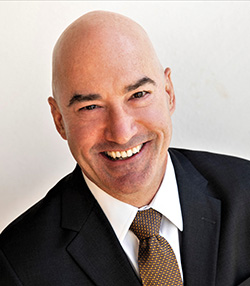
Attorney Quentin Brogdon
Quentin Brogdon has over thirty years of experience and expertise in the field of personal injury trial law. He is board certified in both personal injury trial law and civil trial advocacy. Quentin has received an AV rating from Martindale-Hubbell, the highest possible rating. This rating reflects an attorney’s ethics and abilities according to reviews from fellow attorneys. [ Attorney Bio ]


Recent Comments