

- October 9, 2026
- Catastrophic Injury

A catastrophic injury case often turns on testimony from people who never touched the vehicles involved, and an expert witness in a personal injury case in Texas can determine whether a jury sees the full weight of what happened.
Insurance companies retain their own experts routinely, often before a claim even reaches litigation. A case without comparable expert support enters that negotiation at a real disadvantage, regardless of how sympathetic the facts might seem on their own.
If an accident someone else caused left you or someone you love with a life-altering injury near Dallas, the professionals building your case behind the scenes matter as much as the attorney presenting it.
Reaching out to a Dallas catastrophic injury attorney for a free consultation helps you understand what that team actually looks like.
Key Takeaways: Need for Expert Witnesses in a Texas Personal Injury Case
- Expert witnesses translate technical and medical facts into testimony a jury or insurer can evaluate, rather than leaving those conclusions to guesswork.
- Accident reconstruction and biomechanical experts establish how a crash happened and what forces caused specific injuries.
- Forensic economists and vocational rehabilitation experts calculate the lifetime financial impact of an injury, not just the costs incurred so far.
- Retaining multiple experts requires significant upfront investment, which shapes which firms actually build this kind of case.
- Insurance companies routinely retain their own experts, so a claim without comparable support often starts from a weaker negotiating position.
What experts are needed for a Texas catastrophic injury case, and why don’t most law firms hire them?
A Texas catastrophic injury case typically needs an accident reconstruction expert, a biomechanical engineer, a forensic economist, and a vocational rehabilitation expert, and many firms skip these hires because each one costs thousands of dollars with no guarantee of reimbursement. These professionals translate a crash and its aftermath into testimony a jury or insurer can actually evaluate.
Accident reconstruction experts establish how a crash physically happened.
Forensic economists calculate lifetime lost income and future medical costs.
Vocational rehabilitation experts document what work a person can still perform after an injury.
Retaining these professionals requires upfront money and case preparation many firms avoid, which is exactly why the choice of firm matters.
What Is an Expert Witness in a Personal Injury Case in Texas?
An expert witness in a personal injury case in Texas is someone with specific technical or professional background who testifies about facts a typical juror wouldn’t otherwise understand.
Texas courts require this kind of testimony for certain technical conclusions, since a juror can’t be expected to independently calculate lifetime medical costs or reconstruct a collision’s physics.
How Expert Testimony Differs from a Treating Physician’s Notes
Expert testimony differs from a treating physician’s notes because a treating doctor documents what happened during treatment, while an expert witness in a personal injury case often addresses questions the treatment itself never covered.
A treating physician can confirm a patient suffered a spinal injury and describe the treatment provided.
A biomechanical engineer or an accident reconstructionist addresses a different question entirely: what physical forces caused that injury in the first place, and how does that connect to the other driver’s actions.
Why Courts Require Experts for Certain Claims
Courts require expert testimony for certain claims because some conclusions, like future medical costs or the mechanics of a collision, fall outside common knowledge and require specialized analysis to establish reliably.
Texas rules of evidence set standards for what qualifies someone as an expert and what methods their testimony must follow. A case that skips this testimony on a technical issue risks leaving a jury without the information needed to reach a fully informed verdict.
These same rules apply to any expert an insurance company hires to dispute your claim, which cuts both ways. An insurer’s own reconstruction expert or medical reviewer has to meet the same reliability standard, which means their conclusions can be challenged just as thoroughly as any expert testimony offered on your behalf.
Which Experts Does a Catastrophic Injury Case Typically Require?
A catastrophic injury case typically requires several categories of experts working together, each addressing a different piece of what happened and what it costs going forward. No single professional can credibly speak to how a crash happened, what it did to the body, and what it will cost for the rest of a person’s life.
Accident Reconstruction Expert in Texas
An accident reconstruction expert in Texas analyzes physical evidence, including skid marks, vehicle damage, and scene photographs, to determine how a crash actually unfolded. This professional often relies on physics calculations and specialized software to model speed, angle of impact, and sequence of events.
Their conclusions frequently counter a driver’s or company’s account of what happened, particularly when that account doesn’t match the physical evidence left behind.
Biomechanical Engineer in a Car Accident Case
A biomechanical engineer in a car accident case examines how the forces from a collision affected a specific person’s body, connecting the mechanics of the crash to the medical injuries that followed.
This analysis matters most when an insurer argues an injury couldn’t have resulted from a crash of a given severity. A biomechanical engineer’s testimony addresses that argument directly, using the physical evidence rather than relying on assumption.
That dispute comes up often in traumatic brain injury claims and spinal cord injury claims, where insurers frequently contest the link between crash forces and the injury itself.
Life Care Planner
A life care planner maps out the medical care, equipment, and support a person will need for the rest of their life after a catastrophic injury. The life care plan lists each treatment, device, and service, along with how often it will be needed and what it costs.
That plan becomes the foundation for future cost figures, which is why a life care planner and a forensic economist often work side by side.
Forensic Economist in a Personal Injury Case
A forensic economist in a personal injury case calculates the full financial impact of an injury over a person’s expected lifetime, including lost earnings, reduced earning capacity, and future medical costs adjusted for inflation.
These calculations often produce figures far higher than what a first glance at medical bills would suggest. A forensic economist’s projections give a jury a concrete number to work from, rather than an abstract sense that an injury was serious, and they form the core of a claim’s economic damages.
Vocational Rehabilitation Expert in an Injury Claim
A vocational rehabilitation expert in an injury claim evaluates what kind of work a person can still perform after a catastrophic injury, and what that limitation costs in lost career opportunities.
This professional often interviews the injured person, reviews medical records, and sometimes conducts functional testing to establish concrete limitations. Their findings connect directly to what a forensic economist later calculates, since lost earning capacity depends on knowing exactly what work remains possible.
A vocational expert’s evaluation also matters for people who can technically return to some kind of work but not the career they had before the injury. A construction worker who can no longer lift heavy materials but could handle a desk job still experiences a real loss, even though they haven’t stopped working entirely, and this expert’s testimony puts a number on that gap.
| Expert Type | What Their Testimony Establishes |
|---|---|
| Accident Reconstruction Expert | How the crash physically happened, including speed and sequence of events. |
| Biomechanical Engineer | How crash forces caused specific injuries to the body. |
| Life Care Planner | The medical care, equipment, and support needed for the rest of a person’s life. |
| Forensic Economist | Lifetime financial losses, including future income and medical costs. |
| Vocational Rehabilitation Expert | What work capacity remains after the injury. |
Why Don’t Most Law Firms Hire These Experts?
Most law firms don’t hire this full team of experts because doing so requires substantial upfront money with no guarantee the case will pay that cost back.
Retaining an accident reconstructionist, a biomechanical engineer, a forensic economist, and a vocational expert on a single case can cost tens of thousands of dollars before a settlement ever materializes.
The Upfront Cost of Retaining Multiple Experts
The upfront cost of retaining multiple experts often runs into five figures per case, covering each professional’s review, report preparation, and testimony if the case reaches trial. A firm fronting these costs takes on real financial risk, since that money isn’t recovered if a case doesn’t resolve favorably.
That risk shapes which firms are willing to build a full expert team rather than settling for a single treating physician’s opinion.
Why Volume-Based Firms Avoid This Investment
Volume-based firms avoid this investment because handling a high number of cases at once makes it harder to justify spending heavily on any single one.
A firm built around settling cases quickly has less incentive to build the kind of expert-supported record that maximizes a catastrophic injury claim’s value. That business model works fine for a straightforward soft-tissue injury case, but it often shortchanges a client dealing with a permanent, life-altering injury.
The difference tends to show up most clearly in how a case gets valued during settlement talks. An insurer negotiating against a firm with a documented expert record knows that record will hold up in front of a jury, which changes the settlement conversation considerably compared to a claim supported by medical bills alone.
Why Does Working with a Dallas Catastrophic Injury Attorney Matter?

Working with a Dallas catastrophic injury attorney matters because building an expert-supported case requires both the financial willingness to retain that team and the knowledge to select the right professionals for your specific injuries.
An attorney who regularly handles catastrophic cases already has working relationships with accident reconstructionists, economists, and medical experts, rather than starting that search from scratch after taking a case.
At Crain Brogdon, LLP, Quentin Brogdon and our trial team prepare catastrophic injury cases with this kind of expert support from the start. You can review our results in catastrophic cases to see how that preparation has played out for past clients.
Questions Worth Asking Early
A few considerations can help you evaluate whether a case is being built with this kind of support:
- Which experts a firm plans to retain: This gives you a sense of how thoroughly your case will be documented, and whether it matches the specific injuries involved.
- When expert evaluations happen: Requesting updates on this timeline helps you track how your case develops rather than wondering where things stand.
- What records you can keep on your own: Documenting medical appointments, work restrictions, and daily limitations gives any expert brought onto your case a fuller picture to work from.
Bringing This to a Consultation
Raising these questions early, before a case gets underway, gives you a clearer sense of how a firm approaches a case like yours and what kind of team stands behind it.
Frequently Asked Questions About Catastrophic Injury Claims in TX
How long do I have to file a catastrophic injury claim in Texas?
Texas generally gives you two years from the date of the injury to file a personal injury or wrongful death lawsuit. Missing the deadline bars you from recovering compensation no matter how strong your case. Enlisting the help of an attorney early safeguards your rights and helps preserve vital evidence to support your case.
What if a government vehicle or agency contributed to my catastrophic injury?
Claims involving a government-owned vehicle or a government agency follow different rules than a claim against a private driver or company. Texas law requires formal written notice to the government entity within six months after the accident, so reaching out promptly protects your ability to bring a claim at all.
Do I have to pay for experts out of pocket while my case is pending?
In most personal injury cases handled on a contingency basis, the firm covers expert costs upfront and recovers them from any settlement or verdict. Whether that arrangement applies to your case is something to confirm directly during a consultation.
Will my case definitely need every type of expert mentioned here?
Not necessarily. The experts a case actually requires depend on the specific injuries, the disputed facts, and how clearly liability is established, so a straightforward case may need fewer specialists than a heavily disputed one.
What does a free consultation with a catastrophic injury attorney involve?
A free consultation means an attorney reviews what happened with you at no cost and no obligation to move forward. Expect questions about the accident, your injuries, and any records you already have, followed by an honest assessment of whether your situation looks like a claim worth pursuing.
Call Crain Brogdon, LLP for a Free Case Evaluation
A catastrophic injury case gets built on more than one person’s account of what happened, and the right team of professionals often decides whether a jury or an insurer sees the full picture.
Through our catastrophic injury practice, Crain Brogdon, LLP reviews cases for Dallas area families dealing with a serious injury or the loss of someone they love. Call (214) 522-9404 for a free case evaluation, and let’s talk through what happened.
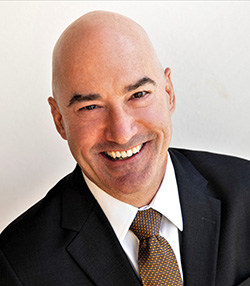
Attorney Quentin Brogdon
Quentin Brogdon has over thirty years of experience and expertise in the field of personal injury trial law. He is board certified in both personal injury trial law and civil trial advocacy. Quentin has received an AV rating from Martindale-Hubbell, the highest possible rating. This rating reflects an attorney’s ethics and abilities according to reviews from fellow attorneys. [ Attorney Bio ]


Recent Comments