

- October 9, 2026
- Personal Injury
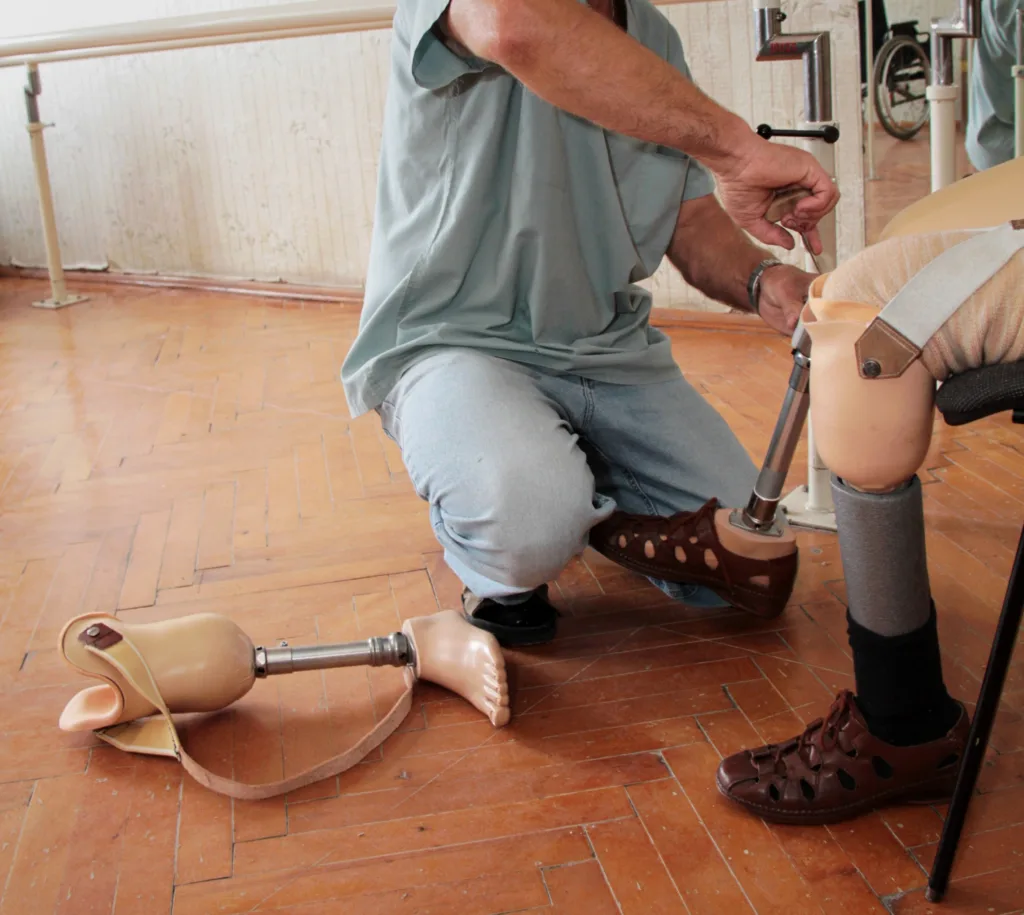
Losing a limb changes what your body can do for the rest of your life, and an amputation injury lawsuit in Texas exists specifically to account for that lifetime impact, not just the initial hospital bill.
Prosthetic technology, vocational retraining, and long term medical care all carry price tags that most people never think about until they’re staring down a lifetime of them. A claim built around only the emergency surgery misses most of what an amputation actually costs a person over the decades that follow.
If an accident someone else caused led to your amputation, or took a limb from someone you love near Dallas, the costs ahead of you extend far beyond what any first estimate usually captures.
Reaching out to a Dallas catastrophic injury attorney for a free consultation can help you understand what a full accounting of those costs actually looks like.
Key Takeaways: Amputations and Catastrophic Injury Compensation in TX
- An amputation claim should account for lifetime prosthetic replacement costs, not just the initial device.
- Lost earning capacity often represents one of the largest categories of loss in an amputation case, particularly for workers in physically demanding jobs.
- Workplace amputations sometimes allow a direct negligence claim against an employer, especially when that employer opted out of the workers’ compensation system.
- A third party, such as an equipment manufacturer or a property owner, can bear responsibility even in cases involving a workplace accident.
- Documenting how an injury affects daily function strengthens a claim well beyond what medical records alone typically show.
What compensation can I recover for an amputation or limb loss injury in Texas?
You can recover compensation for medical care, prosthetic devices, lost income, and pain and suffering after an amputation caused by someone else’s actions in Texas. A claim can also include future costs tied to ongoing care and reduced earning capacity.
Medical costs cover the amputation itself, related surgeries, and rehabilitation.
Prosthetic costs account for the device itself and its replacement over your lifetime.
Lost income covers wages missed during recovery and any reduction in future earning capacity.
These categories form the foundation of most claims, though the specific facts of your injury shape the final value.
What Does an Amputation Injury Lawsuit in Texas Actually Cover?
An amputation injury lawsuit in Texas covers both the immediate costs of treatment and the lifetime costs that follow a limb loss, spanning medical care, lost income, and the pain that comes with a permanent physical change. Texas law divides these losses into two broad categories that shape how a claim gets valued.
Economic Damages for Medical Care and Lost Income
Economic damages cover the specific, calculable costs an amputation creates, including surgery, hospitalization, rehabilitation, and any income lost during recovery. These figures typically come from medical bills, employment records, and expert projections about future costs.
A claim that stops at current bills misses future surgeries, ongoing physical therapy, and the earning capacity an amputation often takes away permanently.
Non-Economic Damages for Pain and Loss of Function
Non-economic damages compensate for losses that don’t come with a receipt, including pain, the loss of specific physical abilities, and the adjustment an amputation requires in daily life.
Texas law allows recovery for these losses alongside economic damages, since a fair claim accounts for more than just money spent on treatment.
A person who loses a hand faces a different daily reality than someone with a straightforward broken bone, and a claim should reflect that difference.
Traumatic Amputation Settlement in Texas Value Factors
A traumatic amputation settlement in Texas typically reflects the specific limb involved, the level of amputation, and how the loss affects a person’s ability to work and function independently.
A below the knee amputation generally carries different long term implications than an above the knee amputation, given the mechanics involved in prosthetic use.
Settlement value also reflects the clarity of liability, since a case with strong evidence of fault tends to resolve for more than one where responsibility remains disputed.
What Do Prosthetics Actually Cost Over a Lifetime?
Prosthetics cost far more over a lifetime than most people initially assume, since a single device rarely lasts more than a few years before it needs replacement or significant repair. A claim that accounts for only one prosthetic misses the reality that most amputees replace their devices repeatedly over a normal lifespan.
Prosthetic Costs in a Personal Injury Claim
Prosthetic costs in a personal injury claim typically include the initial device, ongoing maintenance, and replacement devices every few years as technology changes and components wear down.
An advanced prosthetic limb with microprocessor components can cost tens of thousands of dollars, and insurance rarely covers the full expense of the most functional options available. A claim should account for this replacement cycle across a person’s expected lifespan, not just the cost of a single device purchased shortly after the injury.
| Prosthetic Category | Typical Replacement Consideration |
|---|---|
| Basic Mechanical Prosthetic | Lower upfront cost, shorter functional lifespan, frequent adjustment needs. |
| Myoelectric Or Microprocessor Prosthetic | Higher upfront cost, greater function, still requires periodic replacement. |
| Pediatric Prosthetics | Require more frequent replacement as a child grows, increasing lifetime cost. |
Why Replacement Schedules Matter for a Growing Child or Active Adult
Replacement schedules matter because a prosthetic device wears out faster for an active adult and gets outgrown faster for a child, both of which drive lifetime costs higher than a single purchase would suggest.
A working adult who relies on a prosthetic daily puts far more wear on the device than someone with a more sedentary routine.
A child’s growth alone can require a new socket or entire device every year or two during active growth periods, a cost a claim needs to anticipate rather than discover later.
How Does Limb Loss from a Workplace Accident in Texas Get Compensated?

Limb loss from a workplace accident in Texas gets compensated differently depending on whether the employer carries workers’ compensation insurance, since Texas allows employers to opt out of that system entirely.
That distinction shapes whether a worker’s only option is a capped comp claim or a full negligence lawsuit against the employer.
Workers’ Compensation Versus a Direct Negligence Claim
Workers’ compensation pays out regardless of fault but caps what an injured worker can recover and blocks a direct lawsuit against the employer. An employer that opted out of that system, called a non-subscriber, loses several legal defenses and opens itself to a full negligence claim instead.
That claim can account for pain and suffering and the complete scope of lost earning capacity, categories a standard workers’ compensation claim doesn’t cover at all.
When a Third Party Bears Responsibility for a Workplace Amputation
A third party bears responsibility for a workplace amputation when equipment failure, a defective machine guard, or another company’s negligence contributed to the injury, separate from anything the employer itself did wrong.
Manufacturers and Maintenance Contractors May Be Liable
An equipment manufacturer whose machine lacked a proper safety guard, or a maintenance contractor who missed a known defect, can face a claim independent of the employer’s own coverage status.
Identifying every party connected to the machine or work site matters as much as identifying the employer’s insurance situation.
Third-Party Claims May Exist Alongside Workers’ Compensation
This distinction matters even when an employer does carry workers’ compensation insurance, since a comp claim against the employer doesn’t prevent a separate negligence claim against a manufacturer or contractor.
Workers May Pursue Both Claims
A worker can pursue both at once, and doing so often captures losses a workers’ compensation claim was never designed to cover in the first place.
What Makes a Crush Injury Amputation Case Different?
Crush injury amputation cases differ from other amputation claims because the injury often develops in stages, sometimes requiring multiple surgeries before doctors determine amputation is necessary at all.
That extended treatment timeline changes both the medical record and the way a claim gets valued.
Why Crush Injuries Often Require Multiple Surgeries Before Amputation
Crush injuries often require multiple surgeries before amputation because doctors initially try to save the limb, and that effort creates a longer, more complicated medical history than a clean traumatic amputation would produce.
A crush injury from heavy equipment, a vehicle collision, or a workplace accident can involve attempts at reconstruction, infection management, and repeated procedures before amputation becomes the only remaining option.
A crush injury amputation lawyer accounts for this entire treatment history, not just the final surgical outcome, since each earlier procedure adds to the overall claim.
Proving How the Crush Injury Happened
Proving how a crush injury happened typically requires reconstructing the mechanical sequence of events, since the specific machine, vehicle, or object involved usually determines who bears responsibility.
Equipment maintenance records, witness accounts, and sometimes an engineering review of how the machine or vehicle failed all factor into establishing fault. A clear reconstruction of those moments often matters as much to a claim’s value as the medical outcome itself.
Why Does Working with a Dallas Catastrophic Injury Attorney Matter?
Working with a Dallas catastrophic injury attorney matters because insurers routinely undervalue amputation claims by focusing on current medical bills rather than lifetime costs.
An adjuster reviewing a claim has no independent incentive to account for a prosthetic replaced every few years across four or five decades, or for a career path an amputation permanently closes off. Having someone build that full lifetime picture changes what a case is worth from the outset.
Early Documentation Can Strengthen the Claim
Several considerations can help strengthen an amputation claim as it develops. None of these require handling the case alone, but understanding them shows why early documentation matters.
Track Prosthetic Care and Replacement Costs
Keeping detailed records of every prosthetic fitting, adjustment, and replacement creates a clear cost history over time.
Document Changes to Your Career and Earning Capacity
Saving documentation of any job you couldn’t return to, or any role you had to change because of your injury, helps establish lost earning capacity.
Record How the Injury Affects Daily Life
Writing down specific daily tasks that have become harder or impossible supports a claim for the loss of function, not just the loss of the limb itself.
Bring Your Records to the Initial Consultation
Bringing this information to a consultation allows for a more complete case evaluation from the start.
Frequently Asked Questions About Amputation Claim Compensation in TX
How long do I have to file an amputation injury claim in Texas?
Texas generally gives you two years from the date of the injury to file a personal injury or wrongful death lawsuit. If you fail to file a lawsuit before the deadline, the court will dismiss your case, and you’ll have no legal recourse to obtain compensation.
What if a government owned vehicle or piece of equipment caused my amputation?
Claims involving a government owned vehicle or piece of equipment follow different rules than a claim against a private company or driver. Texas law requires formal written notice to the government entity within six months after the accident, so reaching out promptly protects your ability to bring a claim at all.
Does my case still have value if doctors tried several surgeries before amputating?
Yes. Each surgery, hospitalization, and treatment attempt before amputation adds to the overall medical history and cost of your claim, rather than reducing it. A longer treatment path often reflects a more serious injury, not a weaker case.
Can I recover for a prosthetic that insurance already partially covered?
Yes, in many cases. A claim can account for the gap between what insurance covers and what a fully functional prosthetic actually costs, along with future devices insurance may not fully cover either.
What does a free consultation with a catastrophic injury attorney involve?
A free consultation means an attorney reviews what happened with you at no cost and no obligation to move forward. Expect questions about the accident, your treatment so far, and any records you already have, followed by an honest assessment of whether your situation looks like a claim worth pursuing.
Call Crain Brogdon, LLP For a Free Case Evaluation
An amputation changes what your body can do for the rest of your life, and a fair claim needs to reflect decades of cost, not just a single hospital stay.
Crain Brogdon, LLP reviews amputation and limb loss cases for Dallas area families dealing with a serious injury or the loss of someone they love. Call (214) 522-9404 for a free case evaluation, and let’s talk through what happened.

Attorney Quentin Brogdon
Quentin Brogdon has over thirty years of experience and expertise in the field of personal injury trial law. He is board certified in both personal injury trial law and civil trial advocacy. Quentin has received an AV rating from Martindale-Hubbell, the highest possible rating. This rating reflects an attorney’s ethics and abilities according to reviews from fellow attorneys. [ Attorney Bio ]


Recent Comments