

- July 24, 2026
- Motorcycle Accident
Strong motorcycle accident evidence Texas riders can use may be the difference between a case built on assumptions and one built on facts. Motorcyclists sometimes face arguments about speed, visibility, riding behavior, or risk-taking that are not supported by what actually happened.
Crain Brogdon, LLP handles a limited number of catastrophic injury and wrongful death cases, allowing us to investigate serious motorcycle crashes in depth and build claims around physical, digital, medical, and witness evidence.
Texas motorcycle crashes can have devastating consequences. The Texas Department of Transportation reports 557 rider deaths and 2,468 serious injuries in its most recent full year of motorcycle crash data. Call 214-522-9404 for a free case review after a catastrophic motorcycle accident.
Key Takeaways
- Objective evidence can counter unsupported assumptions about a motorcyclist’s speed, visibility, or conduct.
- Photographs, video, witnesses, vehicle data, and physical evidence can help reconstruct the seconds before impact.
- Medical evidence must connect the collision to the injuries and document future consequences.
- Texas proportionate-responsibility rules make evidence of each person’s actions especially important.
- A viable catastrophic case requires liability, causation and damages, and sufficient insurance or assets to provide a source of recovery.
What Evidence Is Most Important After a Texas Motorcycle Crash?
The strongest evidence depends on how the crash occurred. A left-turn collision requires a different investigation from a rear-end crash, lane-change collision, defective motorcycle claim, or accident caused by dangerous roadway conditions.
A motorcycle accident investigation Texas case may involve several independent sources of information. The goal is to compare those sources and develop the most accurate reconstruction possible.
What Physical Evidence Survives a Motorcycle Crash Scene?
Skid marks, gouges, debris, vehicle damage, motorcycle damage, tire marks, and final resting positions may reveal the collision sequence. Investigators can also document sight lines and roadway geometry.
Physical evidence is particularly useful when witnesses disagree. Measurements and damage patterns may help evaluate vehicle positions, direction of travel, braking, and impact points.
That evidence can disappear quickly when vehicles are repaired, and road debris is cleared. Serious crashes should therefore be documented before important physical conditions change.
Helmet and Dash Cameras Can Capture Critical Seconds
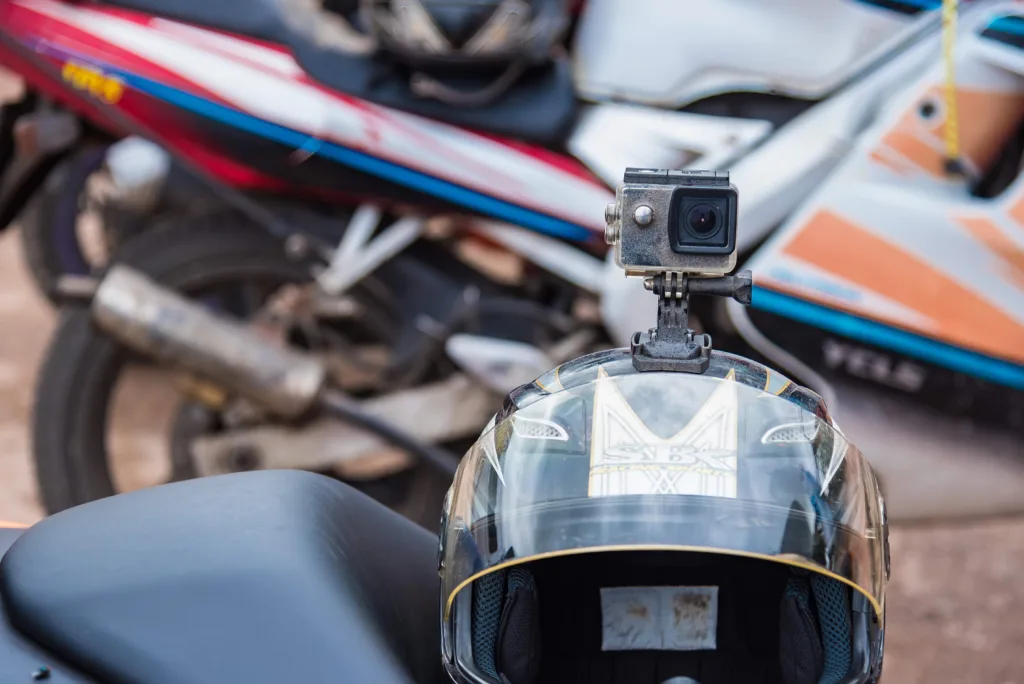
Helmet cameras, motorcycle-mounted cameras, vehicle dash cameras, and nearby surveillance systems can provide unusually direct evidence. Video may show lane position, traffic signals, vehicle movement, visibility, and what occurred immediately before impact.
Footage should be preserved in its original form when possible. Copies posted to social media or sent through messaging applications may lose information or create unnecessary disputes about completeness.
Other motorists may also have recorded the collision without realizing its significance. Identifying nearby vehicles and witnesses can uncover evidence beyond what appears in the initial police investigation.
How to Prove Motorcycle Accident Case Texas Claims Without Relying on Assumptions
Understanding how to prove motorcycle accident case Texas claims starts with separating evidence from stereotypes. A rider’s clothing, motorcycle type, or interest in motorcycling does not establish how that individual was operating the motorcycle at the time of the crash.
Evidence can show whether a driver actually failed to yield, changed lanes, followed too closely, or entered the motorcycle’s path. It can also establish whether the rider was speeding or whether that allegation is unsupported.
Why Photos Motorcycle Accident Case Evidence Matters
Good photos in a motorcycle accident case document more than damaged vehicles. Photographs preserve conditions that may no longer exist when the case is evaluated later.
Useful photographs may document:
- Damage to the motorcycle.
- Damage to other vehicles.
- Debris and skid marks.
- Traffic signs or signals.
- Lane markings.
- Road defects.
- Visibility obstructions.
- Protective riding equipment.
The most useful collection often includes both close-up and wider views. Together, these images provide detail and context.
Can Road Conditions Cause a Texas Motorcycle Crash?
Potholes, construction debris, loose gravel, uneven pavement, standing water, or obscured markings may contribute to some motorcycle crashes. A condition that significantly affects a motorcycle may have much less impact on a four-wheel passenger vehicle.
Road defects may also be repaired soon after a serious collision. Photographs, measurements, maintenance information, and reports can help establish what the roadway looked like when the crash occurred.
A motorcycle crash evidence collection plan should consider the roadway itself rather than focusing entirely on the motorcycle and other vehicles.
What Can Vehicle Data Reveal About a Motorcycle Accident?
Electronic information from involved vehicles may help clarify speed, braking, throttle position, or other vehicle activity before a crash. What information exists depends on the make, model, equipment, and circumstances.
Passenger vehicles increasingly contain event data recorders and other electronic systems. Motorcycles may also contain electronic information, depending on their design and technology.
A motorcycle accident investigation Texas case should determine what digital evidence exists before assuming that none is available.
Cellphone Evidence May Address Distraction
Phone records can become relevant when evidence suggests a driver was calling, texting, navigating, or otherwise using a device around the time of the collision.
Obtaining detailed cellphone information generally requires appropriate legal process. The investigation should target evidence relevant to the crash rather than treating it as an unlimited search of someone’s personal information.
Electronic evidence is most useful when placed alongside physical evidence. A timestamp, vehicle movement, witness account, and crash pattern may establish a clearer timeline together than any single source could.
Police Reports Are Useful But Not the Entire Case
A Texas Peace Officer’s Crash Report can provide driver information, insurance details, witness names, diagrams, contributing factors, and the investigating officer’s observations. TxDOT maintains Texas crash reports through its Crash Records Information System and offers an online process to obtain those reports.
A report can be a useful starting point, but further investigation may uncover information unavailable at the scene.
Severe motorcycle crashes can require reconstruction, vehicle inspection, witness follow-up, medical analysis, or digital evidence beyond what an officer could reasonably collect during the initial response.
How Texas Comparative Responsibility Makes Evidence More Important
Texas follows a proportionate-responsibility system, which is why comparative fault is the central battle in motorcycle cases. Under Texas Civil Practice and Remedies Code § 33.001, a claimant, meaning the injured person bringing the claim, recovers nothing once the jury assigns that person more than 50 percent of the fault. Below that line, the recovery is reduced by the assigned percentage.
This rule makes motorcycle accident evidence Texas cases particularly important when both sides dispute the rider’s conduct. An allegation that the motorcyclist was speeding, following too closely, or improperly passing can affect the case if evidence supports it.
The response should be factual, not emotional. Video, reconstruction, vehicle data, physical evidence, and witnesses may confirm an allegation, disprove it, or show that several people contributed to the collision.
Does Helmet Use Affect a Texas Motorcycle Injury Claim?
Helmet use can affect a Texas motorcycle claim, but it is a separate question from who caused the crash. Texas Transportation Code § 661.003 requires protective headgear, with an exception for riders 21 and older who have completed an approved operator training course or carry qualifying health coverage. Whether a rider fell inside that exception is a factual question worth settling early.
Whether a helmet relates to the extent of a particular injury is a different question from whether another driver caused the collision. Medical evidence becomes important when helmet use is raised in a head injury claim.
Medical Evidence Must Show What the Crash Actually Caused
Winning the liability dispute is only part of a serious motorcycle case. Medical evidence must connect the collision to the injuries and document what those injuries mean for the future.
We take catastrophic motorcycle cases where the harm is permanent and objectively documented rather than soft-tissue in nature. That distinction shapes which records matter and how the damages case gets built.
Medical records, imaging, surgery reports, rehabilitation documentation, prognosis, and functional evaluations can build the causation and damages side of the case.
Future Damages Require Future-Focused Evidence
An injured rider’s current hospital expenses do not necessarily show the full financial effect of a permanent injury. Future medical care, rehabilitation, attendant care, reduced earning capacity, home modifications, and assistive equipment may become significant.
Life-care planning, vocational evaluation, and economic analysis may be appropriate in a catastrophic case. Each projection should be tied to reliable evidence, not speculation.
We focus on developing a credible damages record. Serious litigation is stronger when medical and economic claims can withstand detailed scrutiny.
Motorcycle Crash Evidence Collection Should Include Insurance Information
Motorcycle crash evidence collection should also identify who can legally be held responsible and what insurance or assets are available. A severe injury does not automatically mean adequate coverage exists.
A viable case requires three connected components:
- Liability: Evidence supports legal responsibility for the collision.
- Causation and damages: Medical and other evidence connects the crash to the injuries and losses.
- Ability to pay: Insurance coverage or collectible assets provide a realistic source of recovery.
Those elements must be evaluated together. Evidence proving fault is critical, but catastrophic litigation must also determine the full damages and possible sources of payment.
How Crain Brogdon, LLP Builds Evidence-Driven Motorcycle Cases
We deliberately maintain a low-volume practice focused on catastrophic injury and wrongful death. That model lets us devote substantial resources to cases requiring reconstruction, medical analysis, engineers, economists, vocational professionals, depositions, testing, and trial preparation.
In unusually complicated litigation, our case expenses can approach $1 million. We handle serious cases nationally and internationally, and clients work directly with the attorneys on their file.
Credibility Matters More Than Motorcycle Stereotypes
A motorcycle case should not depend on portraying every rider as perfect. We approach trial preparation with the view that a trial is largely a race to credibility, and the first side caught overstating loses.
That means addressing unfavorable evidence when it exists and challenging unsupported assumptions when the evidence says otherwise.
From our Dallas office we handle serious rider injuries statewide, including Fort Worth motorcycle accident claims. Call (214)522-9404 for a free case review after a catastrophic crash.
How Long Does a Rider Have to Preserve a Texas Motorcycle Claim?
Texas Civil Practice and Remedies Code § 16.003 generally provides a two-year limitations period for personal injury lawsuits. Specific circumstances can affect a deadline, so an individual case requires its own analysis.
The practical evidence timeline can be much shorter. Surveillance footage may be overwritten, vehicles repaired, road conditions altered, and witnesses become difficult to locate.
Someone researching how to prove motorcycle accident case Texas claims should therefore distinguish between the lawsuit deadline and the need to preserve evidence promptly.
FAQs: Motorcycle Accident Evidence Texas
Several types of evidence raise questions that may not become obvious immediately after a serious motorcycle accident.
Should damaged motorcycle gear be kept after a crash?
Yes, when possible. A helmet, jacket, gloves, boots, and other damaged equipment may contain physical evidence about impact points or the forces involved, so you generally should not discard those items while the case is being investigated.
Can a motorcycle mechanic provide useful evidence?
Potentially. A mechanic may identify damage, component condition, prior repairs, or mechanical problems relevant to the crash, although technical issues may require additional analysis depending on the case.
Can GPS data from a motorcycle ride be used as evidence?
Often, yes. Navigation applications, motorcycle systems, phones, watches, or other devices may contain location, route, or timing information that helps reconstruct events.
What happens when witnesses give conflicting accounts?
You can compare conflicting testimony with physical evidence, video, photographs, electronic data, and other objective information. The consistency and credibility of each account become important.
Does repairing the motorcycle destroy the injury claim?
Not necessarily, but repairs can alter or eliminate useful physical evidence. Document important damage thoroughly and, in significant cases, inspect it before major repairs when possible.
Are police body-camera recordings available after a motorcycle crash?
They may be, depending on whether responding officers used body cameras and whether they retained the recording. Obtaining recordings can involve public-information procedures or formal discovery depending on the circumstances.
We Will Build a Texas Motorcycle Case Around Evidence, Not Assumptions
Strong motorcycle accident evidence Texas riders rely on comes from multiple sources working together. Photographs, physical evidence, vehicle data, video, witnesses, medical documentation, and insurance information can establish what happened and what the collision will mean for the injured person.
For help with photos, physical proof, or digital evidence after a life-changing motorcycle crash, call our Dallas motorcycle accident attorneys at Crain Brogdon, LLP at (214)522-9404 for a free case review. We can examine what has already been collected, identify evidence that may still be available, and explain how it fits into a serious Texas injury claim.

Attorney Quentin Brogdon
Quentin Brogdon has over thirty years of experience and expertise in the field of personal injury trial law. He is board certified in both personal injury trial law and civil trial advocacy. Quentin has received an AV rating from Martindale-Hubbell, the highest possible rating. This rating reflects an attorney’s ethics and abilities according to reviews from fellow attorneys. [ Attorney Bio ]


Recent Comments