

- June 5, 2026
- Truck Accidents
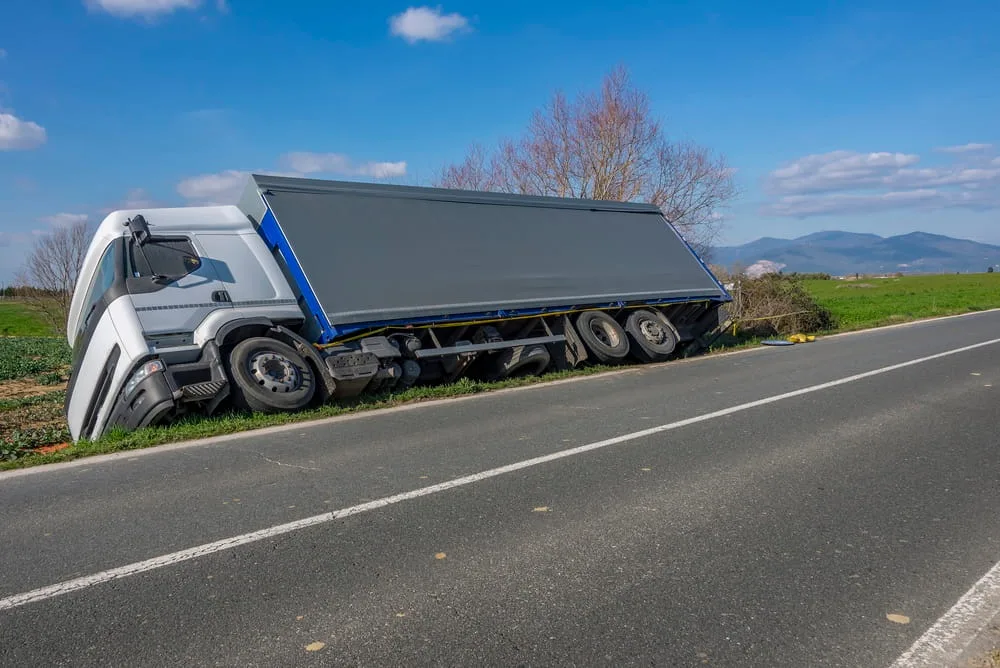
How is liability determined in a Texas 18-wheeler accident when multiple trucking companies are involved?
Liability in these cases is assigned based on which parties had legal control over the truck, the cargo, the driver, or the route at the time of the crash. Texas law and federal trucking regulations allow injured people to pursue claims against more than one company at the same time.
- A trucking company that employed or leased the driver may bear direct liability for the driver’s actions on the road.
- A freight broker that arranged the shipment may face liability if it hired a carrier it knew, or should have known, was unsafe.
- A shipper or cargo loading company can be held responsible if improperly loaded freight contributed to the crash.
An attorney can investigate all parties in the chain of responsibility and build a claim that reflects who actually caused your injuries.
A serious truck accident on a Dallas highway rarely has just one cause, and it rarely has just one responsible party. When an 18-wheeler is involved, the question of 18 wheeler accident liability in Texas often runs through several companies at once, each pointing fingers at the others.
Texas roads like I-20 through South Dallas and the I-35E corridor near downtown see enormous commercial truck traffic every day. The infrastructure handles millions of dollars in freight. When something goes wrong, the legal fallout can involve the trucking company, a freight broker, a cargo shipper, a maintenance contractor, and sometimes a separate leasing company.
All of them may carry some share of responsibility. Sorting out who owes what requires a detailed investigation, access to federal carrier records, and knowledge of both Texas civil law and Federal Motor Carrier Safety Administration regulations.
If you lost someone you love, or if you’re dealing with injuries that have upended your work, your finances, and your daily life, you deserve a clear picture of how these cases actually work, not a runaround from insurers protecting their clients.
A Dallas truck accident attorney can offer a free consultation to help you understand what your case may involve and who the responsible parties might be.
Key Takeaways: Liability in 18 Wheeler Accidents in Texas
- Multiple companies, including motor carriers, freight brokers, shippers, and maintenance contractors, can share liability in a single Texas 18-wheeler accident.
- Federal Motor Carrier Safety Administration regulations, not just Texas state law, govern how trucking companies must operate, and violations of those rules can establish negligence.
- Texas follows a modified comparative fault rule, meaning each defendant can be assigned a percentage of fault, and your recovery depends on your own share of fault being below 51%.
- Freight brokers are not automatically shielded from liability, and recent legal developments in Texas have opened the door to broker liability claims in certain situations.
- Acting promptly matters because trucking companies preserve, and sometimes quickly dispose of, electronic logging data, dashcam footage, and maintenance records that are central to proving a case.
Who Can Be Held Responsible in a Texas Truck Accident?
Who is liable in a Texas truck accident is rarely a simple question because commercial trucking operates through a web of contracts, lease agreements, and federal permits. Dallas 18-wheeler accident claims often have multiple defendants because companies share control over different parts of the same operation, and that shared control is exactly what makes liability so layered.
The Motor Carrier
The motor carrier is the company authorized by the federal government to transport freight on public roads. Under FMCSA regulations, motor carrier liability in Texas extends to the actions of any driver operating under their authority, even if that driver is technically classified as an independent contractor.
Courts have consistently found that when a carrier exercises meaningful control over a driver, such as setting routes, requiring specific schedules, or dictating how freight is handled, the independent contractor label does not insulate them from liability.
If the crash happened because a driver was fatigued, improperly trained, or operating a truck that failed a safety inspection, the motor carrier is typically among the first defendants. Their insurance, their safety records, and their hiring practices all become part of the investigation.
The Leasing Company
Many 18-wheelers on Dallas roads are not owned outright by the motor carrier. They’re leased from separate fleet companies. When a leased truck has a mechanical defect, worn brakes, or faulty steering that contributes to a crash, the leasing company may face claims alongside the carrier.
The lease agreement itself matters here. If the leasing company retained maintenance responsibilities under the contract, their exposure increases significantly.
The Cargo Shipper and Loading Contractor
Shifting or unsecured cargo causes rollovers and jackknife crashes more often than most people realize. Near the Stemmons Freeway interchange, where freight traffic merges from multiple industrial corridors, load shifts at highway speed can be catastrophic.
If a shipper packed the trailer improperly, or a third-party loading company failed to secure the cargo according to federal weight and distribution standards, that company can be named as a defendant in the lawsuit.
The Maintenance Contractor
Some carriers outsource their truck maintenance entirely. If a third-party shop serviced the vehicle and missed a defect that later caused the crash, that contractor may share liability.
This is especially relevant when a crash involves brake failure or tire blowouts, two of the more common mechanical causes of large truck accidents in Texas.
What Is Trucking Company Liability in Texas, and How Does It Work Under Federal Law?

Trucking company liability in Texas is shaped by both state negligence law and a federal regulatory framework that imposes specific duties on carriers, drivers, and anyone operating under a motor carrier’s operating authority. When those federal duties are violated, the violation itself can serve as evidence of negligence.
How FMCSA Regulations Affect Your Case
The Federal Motor Carrier Safety Administration sets binding rules that cover how many hours a driver can be on the road, how trucks must be inspected, what qualifications drivers must hold, and how cargo must be secured.
These aren’t suggestions. They’re enforceable standards, and when a trucking company breaks them, an attorney can use those violations to support your claim.
Some of the FMCSA rules most commonly at issue in Texas truck accident cases include:
- Hours of service regulations, which limit how long a driver can operate without rest
- Drug and alcohol testing requirements for commercial drivers
- Pre-trip and post-trip vehicle inspection requirements
- Cargo securement standards under 49 CFR Part 393
- Driver qualification file requirements, including license history and medical certification
Driver fatigue tied to hours of service violations is one of the most common factors, but fatigued trucking is just one cause among many that FMCSA rules are designed to prevent. Each rule that was broken becomes a data point in building the larger case.
The Borrowed Servant Doctrine and Owner-Operator Relationships
Texas courts sometimes apply the borrowed servant doctrine when a driver is employed by one company but operating under another company’s authority. This doctrine asks which company had the right to control the driver’s work at the time of the crash.
The answer determines which employer faces vicarious liability. These arrangements are common in trucking, and they’re often structured specifically to complicate liability claims.
An attorney familiar with how these agreements work can cut through the paperwork to identify who actually controlled the driver.
Can a Freight Broker Be Sued for a Truck Accident in Texas?
Yes. Broker liability in truck accident cases in Texas is one of the more actively litigated areas of trucking law. Freight brokers arrange transportation between shippers and carriers. They don’t drive the trucks, and they often argue they have no responsibility for how a carrier operates. Courts don’t always agree.
When Does a Broker Face Liability?
A broker may be liable when it hired a carrier with a known safety record that should have disqualified them. If the carrier had prior FMCSA violations, a pattern of accidents, or an unsatisfactory safety rating, a broker who selected them anyway may have been negligent in that selection.
This theory, called negligent hiring or negligent selection, has gained traction in federal courts and in Texas state courts.
A broker who fails to verify a carrier’s insurance, confirm their operating authority, or review their safety data before assigning a load is not automatically shielded just because they weren’t physically present when the crash occurred.
What Federal Law Says
The FMCSA defines brokers separately from carriers and does not impose the same level of direct liability on them. However, that regulatory distinction doesn’t eliminate common law negligence claims under Texas law.
The interplay between federal preemption arguments and state tort claims is one reason these cases require an attorney who has handled this specific type of litigation before.
How Does Texas Assign Fault When Multiple Companies Are Involved?
Texas follows a modified comparative fault system. Each defendant in a lawsuit, including every trucking company named in your case, can be assigned a percentage of responsibility for the crash. Your total recovery is reduced by your own percentage of fault, if any, and you cannot recover at all if your share of fault exceeds 50%.
This matters enormously in multi-defendant truck cases because insurers for each company will often try to shift blame onto the other defendants, and sometimes onto you.
If fault is distributed improperly, or if a key defendant is left out of the lawsuit, you may not recover enough to cover what the crash has cost you.
Joint and Several Liability in Texas
Texas limits joint and several liability, meaning one defendant isn’t automatically required to pay the entire judgment on behalf of all defendants. In most cases, each defendant pays only their assigned percentage.
However, if a defendant is found more than 50% responsible, joint and several liability can apply, making them responsible for the full economic damages award even if other defendants can’t pay their share.
Understanding how fault percentages affect your actual payout is one of the most practical reasons to work with an attorney before accepting any settlement from any of the companies involved.
What Steps Help Protect a Claim After a Multi-Company Truck Accident?
Protecting your legal options after a crash involving multiple trucking companies comes down to how quickly evidence is preserved and how carefully the case is investigated from the start. Several steps can strengthen the foundation of your claim.
Act Before Evidence Disappears
Requesting immediate legal representation allows your attorney to send spoliation letters, which are formal legal notices demanding that each company preserve relevant evidence, including electronic logging device data, dashcam recordings, dispatch communications, and the driver’s employment file.
Trucking companies have their own accident response teams, and they move fast. The same urgency that benefits them can benefit you, if you act early.
Build Your Own Paper Trail
Gathering your own documentation helps too. Records from Baylor University Medical Center or Methodist Dallas Medical Center following your treatment create a baseline of your injuries tied directly to the crash date.
Keeping records of every appointment, every prescription, every day of missed work, and every way the injuries have changed your routine gives your attorney material to work with when valuing your claim.
Local Geography Can Yield Key Evidence
Locations like the I-45 South corridor near Hutchins and the area around the Dallas Logistics Hub in Lancaster see high concentrations of commercial truck traffic and, accordingly, a higher rate of commercial truck accidents.
If your crash happened in or near one of these areas, the traffic patterns, camera infrastructure, and nearby business records may all contain evidence worth pursuing.
Don’t Give a Recorded Statement
Avoid giving recorded statements to any insurance company before speaking with an attorney. Adjusters are skilled at asking questions in ways that produce answers that can be used to reduce your claim. You have no legal obligation to provide a recorded statement before you’ve had a chance to understand your rights.
| Action Item | Reasoning |
|---|---|
| Act Before Evidence Disappears | Have your attorney send spoliation letters immediately to secure electronic logs, dashcam footage, and employment files before they are discarded. |
| Build Your Own Paper Trail | Document all medical treatments, appointments, and impacts on daily life to create a strong foundation for claim valuation. |
| Utilize Local Geography | Your lawyer can leverage traffic patterns, camera infrastructure, and business records near the crash site as potential sources of evidence. |
| Avoid Recorded Statements | Do not give statements to insurance adjusters; their goal is often to use your words to reduce the value of your claim. |
Why Does Having an Attorney Change the Outcome in These Cases?

An attorney changes the outcome because multi-company truck accident cases are built on evidence and legal strategy that most people don’t have the tools or training to develop alone.
Each Defendant Has a Legal Team. You Should Too.
When multiple trucking companies are named in a claim, each one brings its own insurer and defense attorneys. Those teams share a common goal: reduce their client’s exposure, even if that means pushing liability onto you.
A skilled attorney counters that strategy by building a case that holds every responsible party accountable.
Access to Resources That Matter
A knowledgeable Dallas truck accident attorney handling all types of Dallas truck accidents can subpoena records, retain accident reconstruction experts, and depose corporate representatives from multiple companies. Those capabilities directly affect what evidence surfaces and how fault gets assigned.
Without that foundation, defendants have every incentive to lowball a settlement or deny responsibility altogether.
Frequently Asked Questions About Trucking Accident Liability in Texas
Most Texas personal injury claims, including those involving 18-wheelers, must be filed within two years of the crash date. Wrongful death claims follow the same two-year window, running from the date of death. Missing this deadline typically bars any recovery, regardless of how strong the underlying case may be.
Yes, as long as your share of fault is 50% or less. Texas’s modified comparative fault system reduces your recovery by your percentage of responsibility but does not eliminate it unless you cross that 50% threshold. Each defendant’s legal team will likely argue that you bear some fault, which is one reason having legal representation matters throughout the claims process.
When damages exceed a single policy’s limits, your attorney can pursue additional coverage from other defendants in the case, including the broker, the shipper, or a maintenance contractor, each of whom may carry their own commercial liability policies. In some situations, underinsured motorist coverage from your own auto policy may also apply.
Your attorney can obtain the truck’s registration, the carrier’s operating authority information through the FMCSA’s SAFER database, and the driver’s employment records through formal discovery. The freight bill of lading, which documents who owned the cargo and who arranged the shipment, often reveals the full chain of companies connected to the load.
It matters less than the trucking industry often suggests. Under FMCSA regulations, a motor carrier that allows a driver to operate under its authority can still face liability for that driver’s negligence, even if the driver holds an independent contractor classification. Courts look at the actual level of control the carrier exercised over the driver’s work, not just the label on the contract.
Crain Brogdon, LLP: Straightforward Legal Help for Dallas Truck Accident Victims
If you or someone in your family was seriously injured in an 18-wheeler crash in Dallas, or if you lost a loved one in a truck accident that someone else caused, we want to hear from you.
At Crain Brogdon, LLP, we work with people dealing with the real-world weight of injuries, medical bills, and lost income that follow a catastrophic truck crash. We know how these cases are built, who the defendants are, and how carriers and brokers respond when litigation begins.
Our attorneys know Texas trucking law and are focused on holding every responsible party accountable, not just the most obvious one. We handle the investigation, the evidence preservation, and the negotiation so you’re not left trying to manage a multi-company insurance dispute while also recovering from your injuries.
Call us at (214) 522-9404 to schedule a free consultation. There’s no obligation, and no cost to you unless we recover on your behalf. If you’re ready to talk about what happened, we’re ready to listen.
Attorney Quentin Brogdon
Quentin Brogdon has over thirty years of experience and expertise in the field of personal injury trial law. He is board certified in both personal injury trial law and civil trial advocacy. Quentin has received an AV rating from Martindale-Hubbell, the highest possible rating. This rating reflects an attorney’s ethics and abilities according to reviews from fellow attorneys. [ Attorney Bio ]


Recent Comments