

- June 25, 2026
- Slip and Fall
Constructive knowledge is the central issue in almost every serious slip-and-fall case in Texas. Whether a fall occurs in a Dallas grocery aisle, a Houston big-box store, or an Austin restaurant, the core question is whether the property owner knew, or should have known, about a danger in time to fix it. Liability requires proof that the hazard existed long enough that the owner should have discovered and corrected it.
Store defenses often rely on claims of ignorance, but these assertions frequently crumble under scrutiny. Under Wal-Mart Stores, Inc. v. Gonzalez, speculation is insufficient; successful claims require concrete evidence like cleanup logs, surveillance footage, or proof of recurring hazards. Because guesswork fails to meet legal standards, a thorough review of internal store records is necessary to determine if a claim of ignorance is a legitimate defense or a strategy to evade accountability.
Can a Texas Store Really Say It Had No Idea About a Hazard?
In Texas premises liability law, the “we didn’t know” defense is the primary hurdle injured customers face, which can only be overcome by proving the store had actual or constructive knowledge, meaning the hazard existed long enough that the owner should have discovered it, supported by concrete evidence like cleanup logs, surveillance footage, and documentation of recurring hazards; because guesswork is insufficient under Wal-Mart Stores, Inc. v. Gonzalez, it is essential to have an attorney review the store’s internal records to determine if their claim of ignorance is a legitimate defense or a strategic attempt to evade liability.
Key Takeaways About Constructive Knowledge in Texas Premises Cases
- Under Texas Supreme Court precedent, plaintiffs must show the owner had actual or constructive notice of the hazard, not just that a hazard existed.
- Constructive notice usually requires evidence that the condition existed long enough for a reasonable owner to discover and address it.
- Circumstantial evidence like store video, cleanup logs, and employee schedules is often the strongest way to prove constructive knowledge.
- Insurance carriers regularly deny slip-and-fall claims by arguing “no notice,” which puts pressure on plaintiffs to build the timeline early.
- The statute of limitations for most Texas premises injury claims is two years, and video is often overwritten in days or weeks.
Key Statistics About Falls and Premises Injuries
Fall injuries drive an enormous share of emergency department visits in Texas and nationally, and the data helps explain why premises liability cases matter to public safety.
- The CDC reports roughly nine million fall-related injuries treated each year, with about 37 percent of falls producing an injury that requires medical care or reduced activity.
- Emergency departments across the country handle nearly 3 million visits per year for older adult falls alone, a category that overlaps heavily with premises hazards.
- The CDC’s national injury visit data shows unintentional falls as one of the leading reasons Americans end up in the ER.
- Retailers routinely face premises claims tied to slick floors, produce spills, unmarked stairs, and worn matting, especially in stores with high customer volume.
These numbers matter in court because they help juries understand that slip-and-fall injuries are not rare events. They reflect risks that safer inspection habits often prevent.
What Is Constructive Knowledge Under Texas Premises Liability Law?
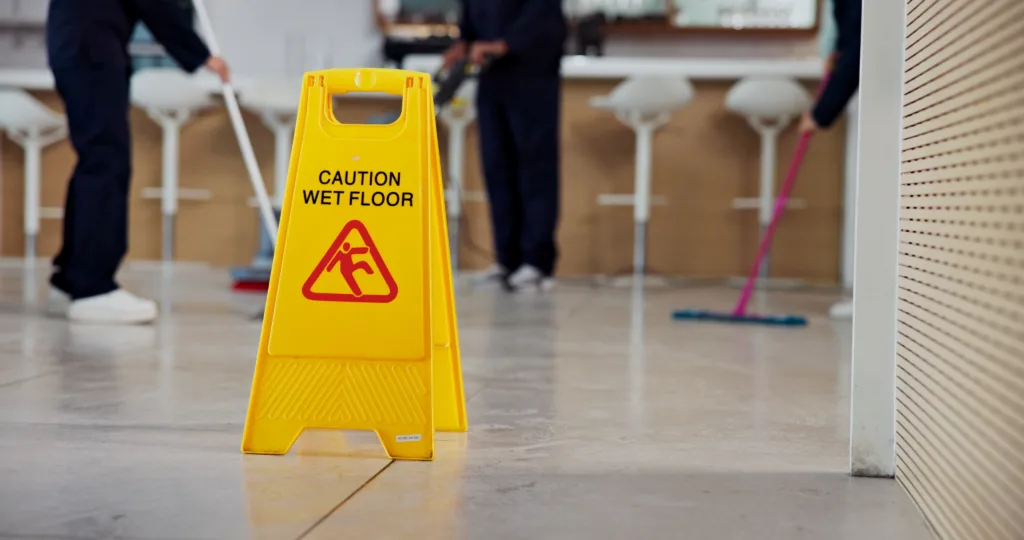
Constructive knowledge, sometimes called constructive notice, is the legal idea that a property owner is held responsible for hazards a reasonable owner would have discovered, even without direct proof they actually saw it. In plain terms, ignorance is only a defense if the ignorance was reasonable.
Texas courts recognize two ways an owner can be charged with knowledge of a hazard:
Actual Knowledge
The owner or an employee saw the hazard, was told about it, or created it. Actual knowledge cases are usually easier to prove when incident reports or employee statements exist.
Constructive Knowledge
Nobody saw the hazard, but the facts show it had been there long enough that the owner should have found it during ordinary safety inspections. This is where most Texas slip-and-fall cases live.
What Do Texas Plaintiffs Have to Prove in a Slip-and-Fall Case?
Texas law places a specific burden on the injured customer. Under Texas premises liability doctrine, a plaintiff must prove four elements:
- The owner had actual or constructive knowledge of the condition
- The condition posed an unreasonable risk of harm
- The owner did not exercise reasonable care to reduce or eliminate the risk
- The owner’s failure proximately caused the injury
The Texas Supreme Court sharpened the constructive knowledge piece in Wal-Mart Stores, Inc. v. Gonzalez, 968 S.W.2d 934 (Tex. 1998). In that case, the Court held that circumstantial evidence must make it “more likely than not” that the condition existed long enough for the owner to discover it. Guesses about how long a spill “could have” been there are not enough.
How Do Attorneys Prove Constructive Knowledge in Texas?
The Gonzalez rule sounds strict, and it is. But Texas attorneys who regularly handle premises cases know that constructive knowledge is usually proved by stacking several types of evidence, not one silver bullet. As Robert Crain has often put it, “Oftentimes with catastrophic injuries, it’s not one mistake. It’s always multiple mistakes.” Premises cases work the same way.
Time-on-Floor Evidence
The most direct form of proof is anything that documents how long the hazard was present. Dirty tracks through a spill, dried edges, footprints, cart marks, and melting ice can all support a timeline argument when combined with other evidence.
Store Video Footage
Surveillance video that captures the moment a hazard first appeared, and the minutes or hours that followed, is often decisive. Store video is also often the shortest-lived evidence in a case, since many systems overwrite footage within 14 to 30 days.
Cleanup and Inspection Logs
Most large retailers require employees to complete regular floor sweeps or safety walks. When those logs show a missed sweep window, or worse, a sweep marked as completed while video shows nothing happened, the credibility problem often becomes the case.
Employee Proximity and Duty Assignments
Timecards, register locations, and staffing records help show whether an employee was standing near the hazard, or whether the aisle was ignored for an entire shift. Proximity alone is usually not enough under Texas law, but combined with time and inspection evidence, it strengthens a constructive knowledge argument.
Recurring Hazards
When a store has a documented history of spills or hazards in the same area, that pattern can support notice all on its own. Produce departments, ice machine walkways, entrance mats, and self-serve drink stations are common recurring-hazard locations.
What Do Store Owners Usually Argue in Response?
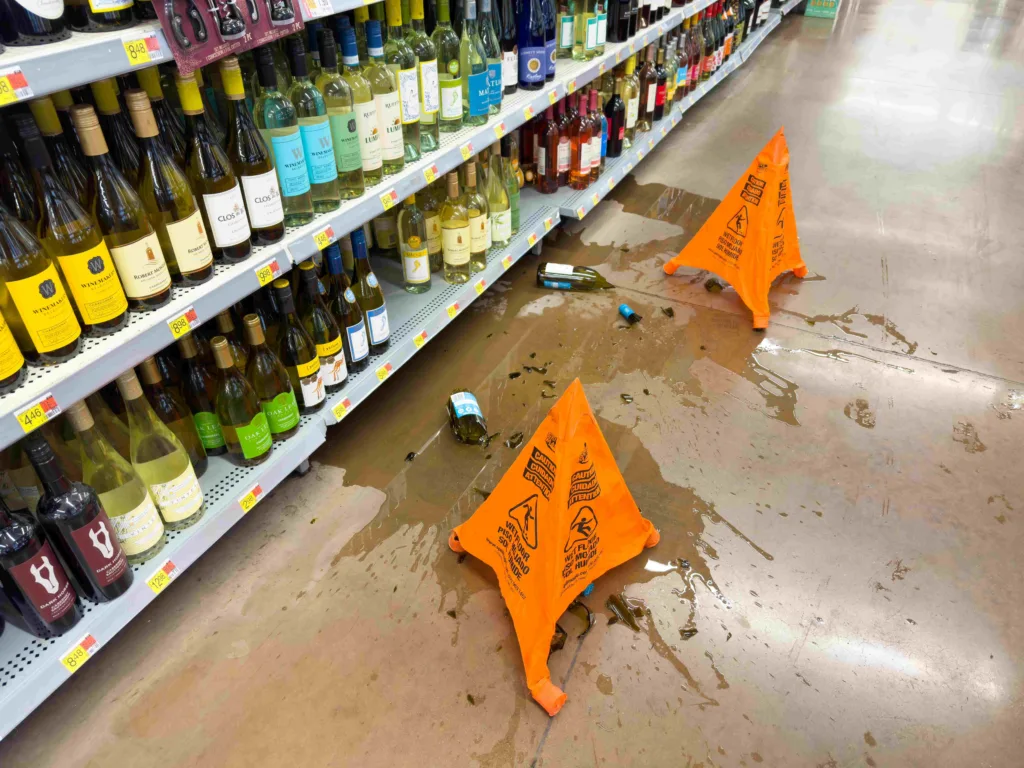
Texas retailers and their insurers have a well-worn defense playbook, and understanding it early often shapes the plaintiff’s evidence strategy. Our Houston premises liability claims team sees the same “no notice” arguments across the Gulf Coast.
Common defenses include claiming the spill “just happened,” pointing to open-and-obvious hazard rules, blaming another customer, arguing the plaintiff was distracted, or challenging whether the condition was really unreasonable. Insurance carriers frequently combine these arguments with quick, low settlement offers before the plaintiff has time to pull records.
Robert Crain has described how these fights often unfold. “It’s been amazing how many times over the past five years where, mysteriously, there’s more insurance than we thought.” The same instinct applies to notice evidence, which routinely turns up once the discovery process is underway.
Key Laws and Deadlines for Texas Premises Injury Claims
Texas premises cases run on strict deadlines, and the evidence a plaintiff needs is often the first thing to disappear.
Most premises liability lawsuits must be filed within two years of the injury under Texas Civil Practice and Remedies Code Section 16.003. Claims against government entities involve much shorter notice deadlines under the Texas Tort Claims Act.
Texas also uses proportionate responsibility, sometimes called modified comparative fault. A shopper who is less than 51 percent at fault may still recover, though any award is reduced by their share of blame. Retailers often argue the plaintiff was looking at their phone, moving too fast, or ignored a warning cone, and defending that percentage can be central to the case.
What Accountability May Look Like After a Texas Premises Injury
Injured shoppers and their families often come to a lawyer wanting more than a check for a hospital bill. They want to know whether the store had been ignoring the same danger for weeks, and whether anything will change. A Texas premises claim built on strong constructive knowledge evidence can address:
- Emergency care, imaging, surgery, and long-term rehabilitation costs
- Lost income and reduced ability to work
- Physical pain and lasting daily limitations
- Home modifications and adaptive support for serious falls
- In cases of gross negligence, exemplary damages that push a business to change
| Evidence Type | What It Often Shows | Typical Time to Preserve |
| Store surveillance video | When the hazard appeared and how long it stayed | Days to a few weeks |
| Cleanup and sweep logs | Missed inspection windows | Weeks to months, if requested early |
| Employee timecards | Who was near, who was assigned | 30 to 90 days |
| Incident reports | Actual knowledge admissions | Retained longer but rarely handed over voluntarily |
| Prior complaints or claims | Recurring hazard patterns | Kept internally, requires discovery |
The table helps illustrate why so much of a Texas slip-and-fall case is decided in the first few weeks after the injury.
When Should You Talk to a Lawyer After a Texas Slip-and-Fall?
Not every fall calls for a lawsuit, but several situations make an early conversation worth the time:
- The injury required an ER visit, surgery, imaging, or ongoing treatment
- The fall involved a broken bone, head injury, or spine injury
- Store employees rushed to clean the area or refused to file a report
- The store or insurer is pressuring a quick, low settlement
- The same hazard has been reported by other customers
- The property involved is a government-owned or leased site
Early legal involvement often makes the difference in whether video and logs are still available. Talking to a lawyer within days rather than weeks usually gives the legal team time to send preservation letters before the evidence rotates out.
What Injured Shoppers Often Find Helpful After a Premises Injury
The hours after a fall tend to be blurry. A few small steps often protect the case without adding stress for anyone still healing.
Many shoppers find it helpful to photograph the hazard, the surrounding area, warning signs (or the lack of them), and any footwear or clothing involved. Asking for a written incident report and keeping a copy is typically wise. Names or descriptions of employees and other shoppers can matter later, even if their contact information is not immediately available.
Social media can quietly damage a premises claim. Many injured shoppers find it helpful to pause public posts about the fall or the store until an attorney has reviewed the file.
Ask Crain Brogdon: Constructive Knowledge Questions
How long does a hazard have to be on the floor for a Texas store to be responsible?
There is no fixed number of minutes. Texas courts require enough time that a reasonable owner would have discovered the danger during ordinary inspections. That answer depends on video, cleanup schedules, and store size, which is why evidence preservation matters early.
Do I have to prove someone actually saw the spill?
In many cases, no. Constructive knowledge lets a plaintiff win by showing the hazard existed long enough that the store should have found it, even without a direct witness.
The store already offered me a small settlement. Should I take it?
Fast offers usually arrive before the full medical picture is clear, and often before video and cleanup logs have been reviewed. A short conversation with a lawyer typically clarifies whether the offer reflects the real value of the claim.
What if I fell in a Texas store owned by a national chain?
National retailers often have detailed corporate cleanup policies, incident report systems, and camera networks. When those systems fail on the day of a fall, the paper trail can strongly support a constructive knowledge argument.
Texas Premises Liability Questions Answered by Attorneys
Does a “wet floor” sign automatically protect a store from a Texas premises claim?
Not automatically. A warning sign is one factor, but the size, placement, timing, and location of the sign all matter. A cone left behind after the hazard was created, or placed too far from the spill, may not defeat a claim.
Can I bring a claim if I fell at an apartment complex or hotel in Texas?
Yes, in many cases. Apartment complexes, hotels, and short-term rental properties owe duties to tenants, guests, and invited visitors. Common problem areas include parking lots, stairwells, pool decks, and hallways.
What if the store already cleaned up the spill before I could take pictures?
Cleanup does not erase a case. Store video, employee statements, and cleanup logs often survive and become central evidence. This is another reason to talk to a lawyer quickly, since preservation letters may need to go out within days.
Can property owners be responsible for crimes committed on their property in Texas?
Sometimes. Negligent security claims are a separate branch of premises liability. They usually apply when a property owner knew about prior similar crimes and failed to take reasonable safety steps, such as lighting, locks, or security personnel.
When the Log Book Tells the Truth
A Texas slip-and-fall case is rarely about one moment. It is usually about the shift schedule, the sweep policy, and the aisle that keeps producing the same hazard. Reading the store’s own records is often how a family finally understands what happened, and why.
Crain Brogdon, LLP offers free consultations, works on a contingency fee basis, and takes on premises cases where the “we didn’t know” defense deserves a real answer. Our Dallas premises liability attorneys regularly pull store video and inspection records before they can be overwritten.
Many slip and fall claims hinge on this question of what a store should have known. To speak directly with an attorney about a Texas premises injury, call (214) 522-9404.

Attorney Quentin Brogdon
Quentin Brogdon has over thirty years of experience and expertise in the field of personal injury trial law. He is board certified in both personal injury trial law and civil trial advocacy. Quentin has received an AV rating from Martindale-Hubbell, the highest possible rating. This rating reflects an attorney’s ethics and abilities according to reviews from fellow attorneys. [ Attorney Bio ]


Recent Comments