

- July 21, 2026
- Catastrophic Injury
An insurance lowball settlement catastrophic injury dispute often begins with a simple mismatch. The injured person is living with a lifetime problem, while the first offer may be built on records that capture only the first weeks or months.
Crain Brogdon, LLP handles a limited number of catastrophic injury and wrongful death matters, allowing us to develop the medical, vocational, financial, and liability evidence these claims can require. Call (214)522-9404 for a free case review if a Texas catastrophic injury claim is being valued before the long-term picture is clear.
A low offer does not automatically prove bad faith. Carriers evaluate risk, disputed facts, coverage, and documentation, while seriously injured people are often still learning what their future will look like. The practical challenge is building a record that makes those future losses difficult to dismiss.
Key Takeaways
- Catastrophic injury claims can be undervalued when future medical care, lost earning capacity, and long-term assistance are not fully documented.
- Early offers may arrive before a stable prognosis is available or before a life-care plan is complete.
- Liability, causation and damages, and available insurance or assets all affect whether a catastrophic claim is viable.
- Texas regulates unfair claim settlement practices, but the rights and remedies available depend on the policy, claimant, and circumstances.
- Detailed medical, vocational, economic, and liability evidence can change how a major claim is evaluated.
Why Do Insurance Companies Offer Low Settlement Amounts?

There is no single answer to why insurance offers low settlement amounts. A carrier may dispute responsibility, question whether all the claimed harm came from the event, use different assumptions about future care, or value non-economic damages differently from the injured person.
Non-economic damages are the human losses that carry no invoice: physical impairment, pain, and the loss of things a person used to be able to do. Because they cannot be printed off a billing system, they are the easiest part of a claim to discount.
Catastrophic claims also carry real uncertainty, because a person facing permanent impairment may need years of care before the full prognosis is available.
Early Offers Can Arrive Before the Picture Stabilizes
An early offer can be based on the first weeks of records alone. Those records say little about whether the person returns to work, needs assistance at home, or faces lasting limits on daily activity.
That gap matters because TBI cases face persistent lowball offers. Losses that show up as reduced capacity rather than as a line item on a bill are harder to price, and a carrier working from an early file may not price them at all.
What Does An Insurance Company Lowball Offer Texas Claim Miss?
An insurance company lowball offer Texas may omit or discount losses that have not yet been fully developed. The most important omissions usually concern the future rather than expenses already paid.
A complete catastrophic damages analysis may need to address future care costs, attendant care, assistive equipment, home modifications, lost earning capacity, and the effect of permanent impairment on daily life.
Future Care Requires More Than a Current Bill
A treating physician may identify the care a person is reasonably expected to need over time. In severe cases, a life-care planner, a professional who prices out a person’s projected long-term needs year by year, organizes those needs into a documented plan.
The goal is not to inflate the claim, but to establish the future care the medical evidence supports in a form that can be evaluated in negotiation or at trial.
Lost Earning Capacity Is Different from Missed Paychecks
Past lost wages measure income already missed. Lost earning capacity asks what a person loses over a future career because an injury limits hours, duties, advancement, or the ability to stay in the same occupation.
Vocational evidence matters when restrictions change the work someone can realistically perform, and economic analysis translates that difference into a long-term financial loss.
How Are Texas Claims Valued in Serious Injury Cases?
Understanding how Texas claims are valued requires looking at both economic and non-economic damages. Medical expenses and lost income can be supported with records, while impairment and other human losses require a different evidentiary presentation.
Texas Civil Practice and Remedies Code § 41.0105 limits recovery of medical or health care expenses to the amount actually paid or incurred by or on behalf of the claimant. In practice that means the billed figure and the recoverable figure are often very different numbers, which makes careful analysis of billing and payment records essential.
Three Questions Determine Whether the Case Works
Crain Brogdon, LLP evaluates catastrophic cases around three connected elements:
- Liability: Is there reliable evidence showing legally actionable responsibility?
- Causation and damages: Does the evidence connect the event to serious harm and document the resulting losses?
- Ability to pay: Is there sufficient insurance, corporate coverage, or other collectible assets?
A devastating injury does not remove the need to prove responsibility, and clear liability does not produce a large recovery when the damages are unsupported or the coverage is inadequate.
Answering a Low Catastrophic Injury Offer With Evidence
Fighting insurance lowball offer disputes is primarily an evidence problem. The more thoroughly the future consequences are documented, the less room there is to evaluate the claim as though the harm were temporary.
That may require several disciplines rather than one report. Crain Brogdon, LLP has the financial capacity to fund intensive case development when the evidence and potential recovery justify it, and expenses in an unusually complex matter can approach $1 million.
Treating Physicians Explain Prognosis
Treating physicians can explain which conditions the event caused or worsened and what care is reasonably expected going forward. Causation gets harder when a person had a substantial prior medical history, and a credible presentation addresses that history directly instead of pretending it does not exist.
Life-Care Planning Gives Future Needs a Structure
A life-care plan organizes projected future needs and their costs over a person’s expected lifetime, and it works best when its assumptions line up with the medical recommendations. Unsupported projections create credibility problems rather than solving them, because a plan that overreaches on one line item invites the carrier to discount the whole document.
Vocational and Economic Analysis Connect Injury to Work
Vocational professionals evaluate how restrictions affect employability and career options, and economists analyze the financial consequences of lost earning capacity and future expenses. These disciplines matter most for younger workers whose injuries may alter decades of future employment.
How Do You Negotiate a Texas Catastrophic Injury Settlement?

Learning how to negotiate insurance settlement Texas claims does not mean simply asking for a higher number. Effective negotiation starts with understanding what the insurer actually disputes and supplying evidence aimed at those specific points.
A detailed demand can lay out liability, causation, future care, earnings, coverage, and other damages in a structured way. Call (214)522-9404 before responding to an offer you are unsure about.
Timing Can Affect Negotiating Leverage
Resolving a catastrophic claim before the prognosis is developed creates serious valuation problems, because once a settlement is final the injured person generally cannot return for more money when future care costs more than expected.
The timing decision should account for how much is actually known and whether the evidence gives a reliable picture.
Trial Preparation Changes the Conversation
Crain Brogdon, LLP approaches serious cases with trial credibility in mind. Quentin Brogdon has more than three decades of personal injury trial experience, is a Fellow of the American College of Trial Lawyers, and served as president of the Texas Trial Lawyers Association.
A case prepared for trial must withstand competing medical opinions, damages challenges, and scrutiny of every factual assertion. That discipline also strengthens settlement negotiations.
What Texas Law Says About Insurance Claim Practices
Texas law prohibits specified unfair claim settlement practices. Texas Insurance Code Chapter 542 addresses unfair claim settlement practices and prompt payment, while Chapter 541 covers unfair or deceptive practices and identifies certain prohibited settlement conduct.
Available remedies differ by claim type. A first-party claim is one you bring against your own insurer, such as an uninsured motorist claim, and it carries different rights from a third-party claim, which is one you bring against someone else’s liability carrier.
Texas Consumers Have a Regulatory Complaint Process
The Texas Department of Insurance accepts consumer complaints involving insurance companies, and recommends keeping records of claim-related communications.
That process is separate from proving negligence and damages in a personal injury case, and the appropriate route depends on the insurance relationship and the conduct involved.
Can Coverage Limits Explain a Low Offer?
Sometimes a low offer reflects the available policy limits rather than any disagreement about what the claim is worth. Texas requires minimum automobile liability coverage of $30,000 per injured person, $60,000 per accident, and $25,000 for property damage.
Those limits sit far below the losses associated with permanent, life-altering harm. A minimum policy can be exhausted before the first year of care is paid for, which is why a serious investigation looks past the first declarations page.
Coverage Investigation Should Start Early
Employer policies, commercial coverage, umbrella insurance, additional responsible parties, and collectible assets can all change the ability-to-pay analysis.
Limits are not always disclosed accurately at the outset either, and coverage is sometimes identified only after a corporate representative answers questions under oath.
Crain Brogdon, LLP investigates coverage alongside liability and damages. Finding a sound source of recovery is an essential element of a viable case, not a detail to check at the end.
Common Responses to a Low Catastrophic Injury Offer
An insurance company lowball offer Texas claimant receives should be evaluated against the evidence behind it. The useful question is not whether the number feels insulting, but what assumptions produced it.
Prognosis, causation, future care, earning capacity, fault allocation, and coverage can all widen the gap between the two sides.
Fighting Insurance Lowball Offer Arguments Requires Credibility
Crain Brogdon, LLP treats trial as a contest of credibility, and the first side caught overstating loses. That affects settlement preparation, because exaggeration weakens an otherwise serious claim.
Fighting insurance lowball offer arguments works better when every important figure traces to medical records, employment history, financial analysis, or another reliable source. Straightforward evidence carries more weight than rhetoric.
Why Crain Brogdon, LLP Handles Fewer Catastrophic Cases
Crain Brogdon, LLP intentionally operates as a low-volume, high-complexity practice, because catastrophic injury and wrongful death cases can require years of work and substantial litigation funding.
Clients work directly with the attorneys handling their case rather than through an intake queue, and those relationships often continue well beyond the lawsuit. From our Dallas office, our catastrophic injury attorneys handle these matters throughout Texas and beyond.
Resources Matter in High-Stakes Litigation
A serious case can require physicians, reconstruction professionals, engineers, economists, vocational consultants, life-care planners, depositions, testing, and trial exhibits. Funding that work lets the evidence develop before major settlement decisions get made. Crain Brogdon, LLP focuses on cases where catastrophic injury or death justifies that level of preparation.
FAQs: Insurance Lowball Settlement Catastrophic Injury
Several practical questions can arise during catastrophic injury negotiations. Here are just a few:
Does rejecting an insurance offer mean the offer disappears?
Not necessarily, but an insurer can change or withdraw an offer depending on the circumstances. Settlement discussions should be evaluated based on the actual written terms and the current status of the claim.
Will an insurer tell you the policy limits up front?
Not always, and the answer can change what a case is worth. Limits are sometimes confirmed only through formal discovery or sworn testimony, which is one reason coverage gets investigated rather than accepted at face value.
Can an insurer ask for an independent medical examination?
In litigation, examinations can sometimes be requested under applicable procedural rules when a person’s physical or mental condition is in controversy. The rules and the permitted scope depend on the case.
Can social media affect catastrophic injury negotiations?
Potentially. Public posts can be compared with claimed limitations, activities, travel, or emotional harm, although a single photograph or post may not tell the complete story.
Can a low settlement offer prove an insurer acted in bad faith?
Not by itself. Whether insurance conduct violates Texas law depends on the relationship between the parties, the policy, the claim, the insurer’s conduct, and the legal standard that applies.
Build the Evidence Before Accepting a Catastrophic Injury Settlement
An insurance lowball settlement catastrophic injury dispute is rarely solved by arguing that an offer is simply too small. The stronger response is a documented account of liability, causation, lifetime care, lost earning capacity, insurance coverage, and the other losses the evidence supports.
For help understanding why insurance offers low settlement amounts, or how to negotiate insurance settlement Texas catastrophic claims, call Crain Brogdon, LLP at (214)522-9404 for a free case review. We can evaluate the evidence, available coverage, and long-term damages without turning the conversation into a sales pitch.
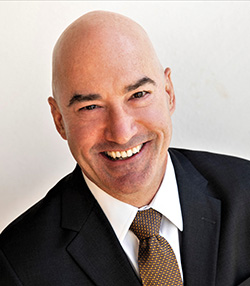
Attorney Quentin Brogdon
Quentin Brogdon has over thirty years of experience and expertise in the field of personal injury trial law. He is board certified in both personal injury trial law and civil trial advocacy. Quentin has received an AV rating from Martindale-Hubbell, the highest possible rating. This rating reflects an attorney’s ethics and abilities according to reviews from fellow attorneys. [ Attorney Bio ]


Recent Comments