

- June 10, 2026
- Pedestrian Accident
Texas consistently reports one of the highest pedestrian fatality rates in the nation, making the identification of common crash patterns a critical component in the pursuit of accountability. Pedestrian incidents in metropolitan areas like Dallas, Houston, Fort Worth, and Austin frequently follow predictable trends documented by traffic safety agencies over several years.
Seven primary factors contribute to these collisions, each carrying specific implications under Texas law and legal standards regarding liability and negligence.
What Causes Most Pedestrian Accidents in Texas Cities?
Most pedestrian accidents in Texas cities happen for a small set of preventable reasons:
– Distracted drivers looking at phones instead of crosswalks
– Failure to yield at marked and unmarked crossings
– Poor lighting at night, especially in fall and winter
– Impaired driving from alcohol or drugs
– Intersections with confusing signals or heavy turning traffic
– School zones where drivers ignore reduced speed limits
– Parking lots where drivers back up without looking
Every crash is different, and speaking with a lawyer can help clarify what happened and what options a family may have.
Key Takeaways About Pedestrian Accident Causes in Texas
- Texas pedestrian fatalities climbed 22 percent over the last five years, and pedestrians now account for one in five traffic deaths in the state.
- Most pedestrian crashes in Texas cities involve driver behavior that could have been avoided, not sudden pedestrian errors.
- Texas uses a modified comparative fault rule. A pedestrian may still recover if found less than 51 percent responsible for the crash.
- The statute of limitations for most pedestrian injury claims in Texas is two years from the date of the crash.
- Insurance carriers often close pedestrian claims quickly with low offers before the full medical picture is clear.
Key Statistics About Pedestrian Crashes in Texas
The numbers help explain why safety agencies treat pedestrian crashes in Texas as a public health issue.
- The Texas Department of Transportation recorded 6,095 pedestrian-involved crashes and 768 pedestrian deaths in 2024, with October the deadliest single month.
- Pedestrian deaths now make up roughly one in five of all traffic fatalities in Texas, a share that has climbed steadily since 2019.
- Nationally, the National Highway Traffic Safety Administration reports 7,080 pedestrian deaths and more than 71,000 pedestrian injuries in 2024, keeping pedestrian safety among its priority campaign areas.
These figures matter in court because they help juries understand that pedestrian injuries are not rare accidents. They reflect patterns that many drivers, cities, and insurers already know about.
What Counts as a Pedestrian Accident Under Texas Law?
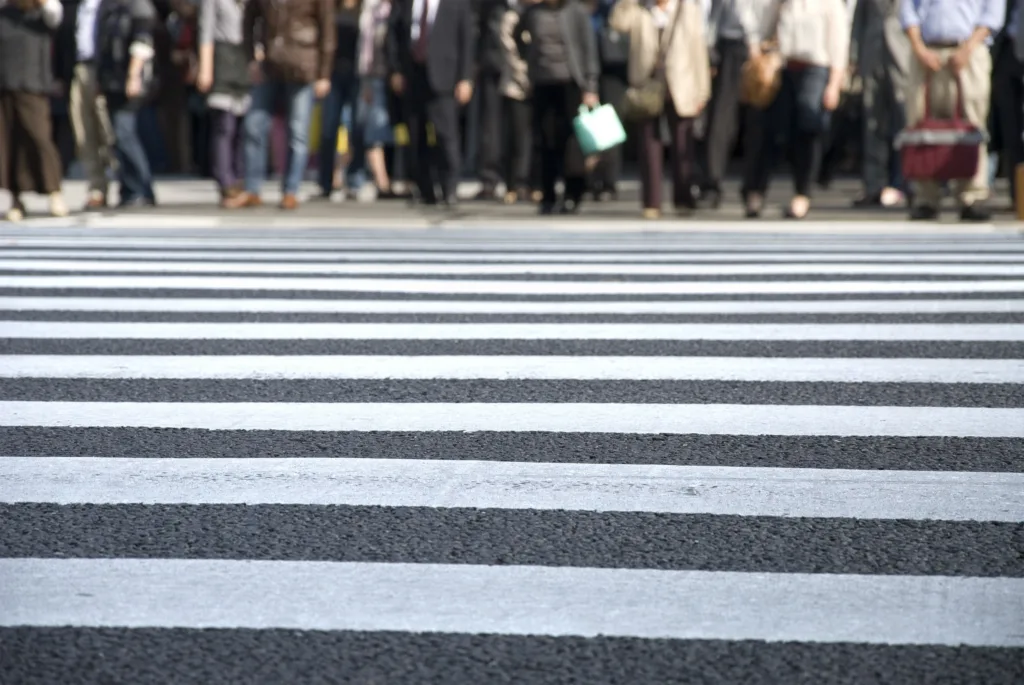
A pedestrian accident in Texas typically involves a person on foot who is struck by a motor vehicle, bicycle, scooter, or other moving vehicle. That includes people walking, jogging, standing at a bus stop, using a wheelchair, or crossing a parking lot. Texas Transportation Code Chapter 552 governs pedestrian right-of-way, crosswalk duties, and driver obligations.
Not every pedestrian claim looks the same. A person hit while crossing at a signal in downtown Dallas is treated differently than someone struck by a delivery driver backing out of a warehouse dock. What ties these cases together is the legal question of whether a driver, a business, or a public entity acted unreasonably under the circumstances.
Which Factors Show Up Again and Again When Drivers Hit Pedestrians?
Certain factors show up in pedestrian crash files again and again. Below are the seven causes that appear most often in Texas cities, with the reasons they matter to families and to a legal claim.
1. Distracted Driving
Distracted driving may be the single most common factor in modern pedestrian crashes. Drivers texting, adjusting navigation, or watching video content often fail to see a person stepping into a crosswalk until it is too late.
Texas law prohibits reading, writing, or sending electronic messages while driving. In a pedestrian injury case, phone records, dash cam video, and vehicle infotainment data can help show what a driver was doing in the seconds before the crash.
2. Failure to Yield at Crosswalks
Under Texas Transportation Code Section 552.003, drivers must yield to pedestrians in a marked crosswalk and at many unmarked intersections. Failure to yield remains one of the recurring factors in pedestrian fatalities across Texas cities.
This is often disputed after a crash. Insurers may argue the pedestrian stepped out without warning. Traffic camera footage, witness statements, and roadway design records typically help sort out who had the right of way.
3. Poor Lighting and Nighttime Conditions
Most pedestrian deaths happen after dark. Shorter days in fall and winter, combined with poorly lit streets, create high-risk conditions in many Texas neighborhoods.
TxDOT specifically warns drivers about rising pedestrian risk during shorter daylight hours. In a claim, lighting conditions may point to shared responsibility on the part of a city or property owner if a walkway was known to be dangerously dark.
4. Impaired or Drunk Drivers
Alcohol and drug impairment continue to drive up pedestrian fatality numbers in Texas. Impaired drivers often react slowly, drift outside their lanes, or run through crosswalks without noticing pedestrians.
Impairment can also expand the pool of people who may be responsible. Bars, restaurants, and social hosts can sometimes face liability under Texas dram shop law if they over-served a driver who later hit a pedestrian.
5. Dangerous Intersections and Turning Traffic
Left-turning and right-turning drivers strike pedestrians frequently, especially in busy Texas downtowns. Complex intersections with multiple lanes, permissive left turns, or short walk signals often cause conflicts between drivers and people on foot.
City engineering choices can be part of the story. Signal timing, missing pedestrian countdown timers, and blocked sightlines are documented in traffic engineering studies that a lawyer may pursue during discovery.
6. School Zone and Neighborhood Crashes
Children walking to school are a distinct category of pedestrian risk. Drivers who ignore reduced school zone speeds or roll through crossing guard signals create predictable dangers on residential streets.
Texas school zone violations carry enhanced penalties, and school district records, bus schedules, and crossing guard reports can all be relevant when a child is hurt. The CDC identifies pedestrian safety for children as a distinct injury-prevention priority.
7. Parking Lot Backover and Low-Speed Crashes
Not every pedestrian crash happens on a busy road. Parking lots at grocery stores, apartment complexes, and shopping centers see frequent low-speed strikes, often involving drivers backing out of stalls.
These cases can be serious. A parking lot backover involving a child, an elderly pedestrian, or a fall onto pavement often produces catastrophic injuries. Store surveillance video and vehicle backup camera data are frequently central to these claims.
Where Do Pedestrian Crashes Happen Most Often in Texas Cities?
Pedestrian crashes cluster in a handful of environments that repeat across Texas cities. Dallas, Houston, Fort Worth, San Antonio, and Austin all share similar high-risk zones.
| High-Risk Zone | Why It Is Dangerous | Typical Evidence in a Claim |
| Urban crosswalks near transit stops | Dense foot traffic, turning drivers | Traffic camera video, signal timing records |
| Suburban arterials with long block spacing | Few crossing points, higher speeds | Speed studies, roadway design plans |
| School zones and residential streets | Children, distracted drivers | School zone signage records, witness reports |
| Parking lots at retail and apartments | Low visibility, backing vehicles | Store surveillance video, EDR data |
| Highway shoulders and disabled vehicles | Drivers exit vehicles into live traffic | 911 audio, accident reconstruction |
The table helps illustrate why “the crash location” is often one of the most important early questions in a Texas pedestrian case.
Key Laws and Deadlines for Pedestrian Injury Claims in Texas

Texas has specific rules that shape almost every pedestrian claim. Missing a deadline or misunderstanding a rule can quietly close doors that never reopen.
The statute of limitations for most personal injury claims, including pedestrian injuries, is two years from the date of the crash under Texas Civil Practice and Remedies Code Section 16.003. Claims against government entities involve much shorter notice deadlines under the Texas Tort Claims Act.
Texas also uses a modified comparative fault rule, sometimes called proportionate responsibility. A pedestrian who is found less than 51 percent responsible may still recover, though any award is reduced by their share of fault. Insurance carriers know this rule well and often push to inflate the pedestrian’s share of blame.
What Accountability May Look Like After a Pedestrian Crash in Texas
Families often come to a lawyer wanting more than a check. They want to know what happened, who allowed it to happen, and whether it can be prevented in the future. Under Texas law, a pedestrian injury claim can address several kinds of losses:
- Emergency and long-term medical care, including surgeries, therapy, and future treatment
- Lost income and reduced ability to work
- Physical pain and lasting effects on daily life
- Home modifications, adaptive equipment, and in-home support
- In rare cases involving gross negligence, exemplary damages that hold a company accountable
As Robert Crain has put it, the work often goes beyond a single family. “Companies don’t want to get hit with a big verdict again. It oftentimes takes them learning their lesson that they can’t get away with it before they make really important safety changes.”
When Should You Talk to a Lawyer About a Pedestrian Injury in Texas?
There is no single moment when it becomes “right” to talk to an attorney, but certain situations call for a conversation sooner rather than later:
- The pedestrian suffered a serious injury such as a brain injury, spinal injury, or broken bones
- A child, elderly relative, or family member was killed
- The at-fault driver claims the pedestrian caused the crash
- The insurer is offering a fast settlement before treatment is finished
- The vehicle involved was a commercial truck, delivery van, rideshare, or government vehicle
Talking to a lawyer early often costs nothing. It typically helps a family understand what evidence needs to be preserved before it disappears.
What Pedestrians and Their Families Often Find Helpful After a Crash
The days after a pedestrian crash tend to be blurry. Small habits can protect a claim without adding pressure to anyone still healing.
Many families find it helpful to keep a single folder, digital or paper, with medical records, discharge instructions, and prescriptions. Photographs of the crash scene, the vehicle, and visible injuries are often useful weeks or months later. Keeping a simple daily note about pain levels, missed work, and canceled plans typically supports a claim more than memory alone.
Social media can quietly harm a case. Many claimants find it helpful to pause public posts about the crash, injuries, or the driver until a lawyer has reviewed the file.
Ask Crain Brogdon: Pedestrian Accident Questions
Can a pedestrian sue if they were jaywalking in Texas?
In many cases, yes. Jaywalking may reduce a recovery under Texas proportionate responsibility rules, but it rarely bars a claim outright unless the pedestrian is found more than 50 percent at fault. Drivers still have a duty to keep a proper lookout, even when a pedestrian is outside a crosswalk.
What if the driver who hit me does not have enough insurance?
There may still be options. Uninsured and underinsured motorist coverage, employer liability if the driver was on the job, and third-party claims against bars, property owners, or vehicle manufacturers can sometimes fill the gap.
How long does a Texas pedestrian accident case typically take?
Timelines vary widely. Some claims resolve within months, while catastrophic cases may take one to three years, especially when trial preparation is needed to push a fair result.
Do I have to give a statement to the driver’s insurance company?
Usually no. Insurance adjusters may call within days of a crash asking for a recorded statement. Talking to a lawyer first is often the safer path, since early statements can be used later to argue about fault or the severity of injuries.
Pedestrian Injury Questions Answered by Attorneys
Are pedestrian accident claims different from car accident claims in Texas?
Yes, in several ways. Pedestrian injuries are often more severe, which raises the stakes at settlement. Fault disputes are more common because there is no second vehicle to compare damage patterns. And city or state roadway design records may become central evidence in ways they rarely are in vehicle-only crashes.
What if a family member was killed while walking in Texas?
Texas allows surviving spouses, children, and parents to bring a wrongful death claim, and the estate may bring a related survival claim for what the person went through before passing. These claims have their own rules and deadlines, so it typically helps to speak with a lawyer as early as possible.
Can a city or the state be responsible for a pedestrian crash?
Sometimes. Public agencies may share responsibility when a crash involves a broken signal, missing crosswalk markings, hidden sightlines, or a dangerous roadway design. Claims against government bodies involve shorter deadlines and specific notice requirements under Texas law.
What if the driver left the scene?
Hit-and-run pedestrian crashes are especially painful because the injured person often has no name to point to. Uninsured motorist coverage on a household auto policy may still apply. Surveillance video, license plate readers, and witness leads can also help identify a driver later.
A Safer Walk Home for the Next Family
Pedestrian crashes rarely feel like accidents to the families living with the aftermath. They feel like something a driver, a business, or a city could have prevented. The role of a Texas pedestrian injury lawyer is to help those families find honest answers, hold the right people accountable, and, when possible, push changes that keep another family off this road.
Crain Brogdon, LLP offers free consultations, works on a contingency fee basis, and walks with pedestrian clients from the first phone call through resolution. If you were hit by a vehicle in Houston, our team can help you understand your options. Dallas pedestrian accident victims and Fort Worth pedestrian accident claims can also reach us the same day. To speak directly with an attorney about a pedestrian injury, please contact our Houston team or call (214) 522-9404.
Attorney Quentin Brogdon
Quentin Brogdon has over thirty years of experience and expertise in the field of personal injury trial law. He is board certified in both personal injury trial law and civil trial advocacy. Quentin has received an AV rating from Martindale-Hubbell, the highest possible rating. This rating reflects an attorney’s ethics and abilities according to reviews from fellow attorneys. [ Attorney Bio ]


Recent Comments