FREE CONSULTATION: 214.522.9404

When a crash on US-75 or a fall at a job site leaves someone you love with a brain injury, the questions start before the hospital stay ends.
A McKinney brain injury lawyer at Crain Brogdon, LLP helps Collin County families find out what happened, who is responsible, and what the injury will cost over a lifetime.
We serve McKinney families from our office in Dallas, and we come to you when that makes life easier.
If you want to talk through what happened, a free consultation is available by phone at (214) 522-9404, any hour of the day.
How Much Is a Brain Injury Claim Worth in Collin County?

A Collin County brain injury claim is valued mainly on two things: the cost of a lifetime of care and the earnings the injured person can no longer make.
Texas places no cap on these damages in an ordinary negligence claim, so the number follows the evidence rather than a statutory ceiling.
That is why the medical bills from the first few weeks say very little about a case.
A person with a permanent injury may need therapy, supervision, and medication for decades, and each of those costs has to be documented and projected forward.
The Pieces That Make Up the Number
A full valuation usually draws on several categories of loss, each proved by a different kind of evidence:
- Future medical and attendant care, projected in a life care plan prepared by a qualified planner.
- Lost earning capacity, measured against what the person could have earned over a working lifetime.
- Physical impairment and mental anguish, which Texas juries can award separately.
- Household services a spouse or parent can no longer perform.
Each category needs its own witness and its own records.
A claim missing one of them is a claim that leaves money for future care on the table.
Limits That Do Apply
Caps can still enter the picture in narrow situations.
A claim against a city or county is limited by the Texas Tort Claims Act, and punitive damages are capped by Chapter 41 of the Civil Practice and Remedies Code.
Identifying who the defendants are early tells your family which rules will shape the recovery.
Do I Need a Brain Injury Lawyer in McKinney?

If the injury is permanent, the answer is usually yes. Collin County brain injury claims are valued on decades of future care, and an insurer has every reason to settle before anyone has measured that future.
A mild concussion that resolves in a few weeks may not need a lawyer at all.
The calculation changes when symptoms persist, when a doctor talks about long-term deficits, or when the person cannot return to the job they held before. That is also the point where it helps to understand why insurers downplay a mild TBI.
Signs the Injury May Be More Serious Than It First Looked
Brain injuries often reveal themselves slowly. Families tend to notice these changes before any test does:
- Trouble finding words, following conversations, or remembering recent events.
- New irritability, impulsiveness, or flat emotional responses.
- Headaches, dizziness, or sensitivity to light that do not fade.
- Difficulty planning a day, managing money, or finishing familiar tasks.
The Centers for Disease Control and Prevention (CDC) notes that these effects can involve thinking, sensation, language, and emotion.
Writing down what you see, with dates, gives the doctors and your McKinney head injury lawyer a record no scan can provide.
Where Brain Injuries Happen Around McKinney

McKinney has grown quickly, and growth brings traffic, construction, and commercial activity onto roads and sites that were quieter a decade ago.
Most of the brain injury cases we review in Collin County trace back to a handful of settings.
Collisions on US-75, SH 121, and US-380
High-speed corridors carry commuters, delivery vans, and 18-wheelers side by side.
In McKinney car accidents, a rear-end impact at highway speed can cause a brain injury even when the head never strikes anything, because the brain moves inside the skull.
Construction and Industrial Sites
New subdivisions, retail centers, and road projects mean scaffolding, ladders, and heavy equipment across the county.
Falls from height and strikes by falling objects are frequent causes of severe head trauma on these sites.
Unsafe Property Conditions
Broken stairs, poor lighting, and unsecured hazards at businesses and apartment complexes can lead to serious falls.
Under Texas premises law, the owner’s knowledge of the danger and the steps taken to fix it often decide the claim.
What Evidence Proves a Brain Injury?

Proving a brain injury means connecting three things: the event, the change in the person, and the cost of that change.
Each link uses different evidence, and insurers look for the weakest one.
Medical Testing and Its Limits
Emergency room CT scans are designed to find bleeding and fractures that need immediate treatment.
A scan that looks normal does not rule out an injury to the brain’s connections, which is why treating doctors often order follow-up imaging and a full neuropsychological evaluation.
Neuropsychological testing measures memory, attention, processing speed, and reasoning against expected norms.
Those results give a jury something concrete to weigh alongside what the family has seen at home.
The People Who Knew Them Before
Some of the most persuasive evidence comes from coworkers, teachers, friends, and neighbors. They can describe how the person spoke, worked, and handled daily life before the injury, and how that changed afterward.
Employment records, school transcripts, and performance reviews support those accounts. A drop in performance after the injury date is hard for a defense lawyer to explain away.
Projecting the Future
A life care planner works with the treating doctors to list the care the person will need, how often, and at what local cost.
An economist then converts those future costs, along with lost earning capacity, into a figure a jury can evaluate.
In Texas, evidence of lost earnings is presented as a net loss after federal income tax, so the economic testimony has to be built correctly from the start.
Accountability Rarely Rests With One Party
Responsibility in a brain injury case is rarely limited to one person. Partner Rob Crain has described the pattern this way: “And oftentimes with catastrophic injuries, it’s not one mistake. It’s always multiple mistakes.”
The table below shows how responsibility commonly spreads beyond the person directly involved.
| Setting | Party directly involved | Others who may share responsibility |
|---|---|---|
| Truck or delivery collision | Driver | Motor carrier, freight broker, maintenance shop |
| Construction fall | Coworker or subcontractor | General contractor, equipment supplier, property owner with control of the work |
| Property hazard | Store or apartment staff | Owner, management company, security contractor |
| Defective equipment | User of the product | Manufacturer, distributor, seller |
Finding every responsible party matters because each one may carry separate insurance, a common situation in McKinney 18-wheeler collisions.
In a catastrophic case, a single policy is often far smaller than the lifetime cost of care.
How Shared Fault Affects the Claim
Texas uses a proportionate responsibility system.
A jury assigns each party a percentage of fault, and an injured person’s recovery is reduced by their own share. If that share is greater than 50 percent, recovery is barred.
As an example, suppose a jury finds total damages of $2 million and assigns the injured driver 20 percent of the fault for speeding. The recovery would be reduced by $400,000, to $1.6 million.
Insurers know this math well, which is why they look hard for any fault they can assign to the injured person.
How a Collin County Brain Injury Case Moves Forward
Every case has its own timeline, but most follow a recognizable path.
Knowing the stages helps families plan around medical care rather than around the claim.
- Investigation. We gather crash reports, video, vehicle data, and witness accounts while they still exist.
- Medical documentation. Treating doctors, neuropsychologists, and a life care planner describe the injury and its future costs.
- Demand and negotiation. The full valuation goes to every insurer involved.
- Lawsuit, if needed. A case arising in Collin County is typically filed in the district courts at the courthouse on Bloomdale Road in McKinney.
- Resolution. The case settles or goes to a jury, and the recovery is structured around the injured person’s long-term needs.
Under Texas venue law, a suit can generally be filed where the events happened or where a defendant lives or has its principal Texas office.
When more than one county qualifies, the choice calls for careful thought from a Collin County brain injury lawyer, because the jury pool and court schedule differ from county to county.
The Two-Year Deadline
Most Texas injury claims must be filed within two years of the injury.
Exceptions exist, including rules that can extend the time for minors and people of unsound mind, while claims against a government body usually require written notice within six months or less.
Because the exceptions turn on specific facts, it helps to have the deadline confirmed early by a McKinney traumatic brain injury attorney.
Why Families From McKinney Choose Crain Brogdon, LLP

Crain Brogdon, LLP is a firm built around catastrophic injury representation.
We keep our caseload small on purpose so each family gets lawyers who know the file, the doctors, and the people involved.
Here is what that looks like in practice:
- Direct access. Clients receive the cell phone numbers of their lawyer and paralegal, and the firm answers around the clock.
- Investigation from day one. We can send accident reconstructionists, engineers, and investigators to a scene quickly, before evidence is repaired, erased, or lost.
- Resources for a long case. We advance the cost of the medical and economic witnesses a brain injury claim requires, and families pay no fee unless there is a recovery.
- Bilingual help. Our team serves families in English and Spanish.
Our firm has recovered more than $355 million in verdicts and settlements for clients.
Past results do not predict or promise the outcome of any future case, and every case depends on its own facts.
If you are caring for someone after a brain injury and want answers about what comes next, call (214) 522-9404 to speak with a McKinney TBI attorney on our team.
FAQs: McKinney Brain Injury Lawyer
Do I have to travel to Dallas to meet with the firm?
No. Crain Brogdon, LLP has one office, in Dallas, where our Dallas brain injury practice is based, and our lawyers regularly meet McKinney families at home, at a rehabilitation facility, or by video.
Many families find it easier to start the conversation where their loved one is receiving care.
Can a family member start a brain injury claim if the injured person cannot make decisions?
Yes, with the right legal authority. In Texas, a court can appoint a guardian for an adult who lacks capacity, and a parent can usually act for a minor child.
Any settlement for a minor or an incapacitated adult generally needs a court’s approval before it becomes final.
Will health insurance or Medicaid need to be repaid from a settlement?
Often, yes. Health plans, Medicare, and Medicaid that paid for brain injury treatment usually have a right to be reimbursed from a recovery.
The amounts can sometimes be reduced through negotiation, so resolving these claims is part of planning any settlement in Texas.
Does it matter if the injured person was not wearing a helmet or seat belt?
It can, but it does not end the claim. In Texas, a defendant may argue that missing safety gear increased the injuries, and the jury can weigh that in assigning responsibility.
The question is how much the gear would have changed the outcome, which usually requires medical and engineering testimony.
How long does a brain injury case in Collin County usually take?
Most serious brain injury cases take one to three years, and some take longer.
The injured person’s condition often needs to stabilize before doctors can project future care. Settling before that point risks undervaluing the injury.

Answers for Your Family Start With a Conversation
A brain injury changes the plans a family made together.
Getting clear answers about what happened and who is responsible is the first step toward making new plans with some security behind them.
Through our McKinney injury practice, Crain Brogdon, LLP works with McKinney and Collin County families on brain injury claims from start to finish.
Call (214) 522-9404 for a free, confidential consultation, or reach out through our website to tell us what happened.

Attorney Quentin Brogdon
Quentin Brogdon has over thirty years of experience and expertise in the field of personal injury trial law. He is board certified in both personal injury trial law and civil trial advocacy. Quentin has received an AV rating from Martindale-Hubbell, the highest possible rating. This rating reflects an attorney’s ethics and abilities according to reviews from fellow attorneys. [ Attorney Bio ]
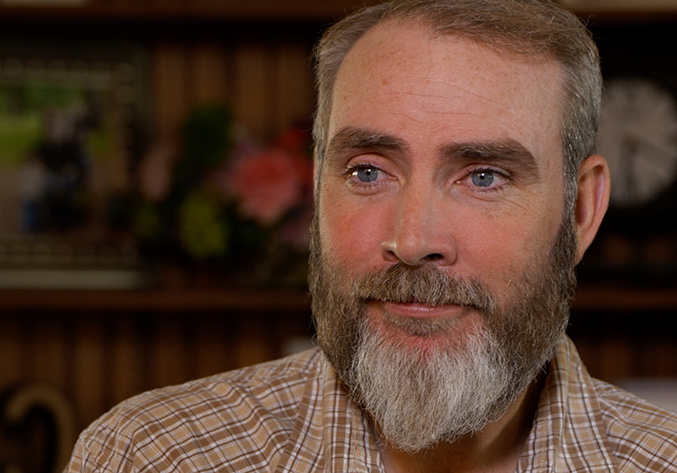

VIDEO: Client Testimonial
Devon Colbert describes working with Crain Brogdon, LLP to recover after a paralyzing injury.